Lessons from the Journey

A few days ago on Twitter, my friend Mollie Hemingway linked to a piece written by a pastor friend of hers, Todd Peperkorn, on depression—or, more specifically, on lessons he’s learned from a decade of surviving depression. I resonated with it very much and found myself almost immediately making connections between Pastor Peperkorn’s experience and my experience of same-sex desire.

Before I go any further, though, I have a caveat or two. I’m wary of Christian portrayals of same-sex attracted folks as “special cases” who are always prone to depression or excessive lust (or whatever). I worry about the power dynamic in play when straight Christians view gay Christians as charity projects. When Christian leaders write sentences like this, “At the heart of the homosexual condition is a deep loneliness, the natural human hunger for mutual love, a search for identity, and a longing for completeness,” I’m not really satisfied unless they turn around and say the same thing about fallen-heterosexuality-as-we-know-it. We’re all prone to weakness, temptation, and sin, and any Christian talk that implies otherwise needs to relearn the gospel.

Furthermore, I think there are crucial differences between the experience of depression and the experience of same-sex sexual desire. The former is something that tends to isolate the sufferer and hinder engagement with others, whereas the latter—misdirected though traditional Christianity understands it to be—is fundamentally about the longing for love, about the desire to give oneself to another human being made in God’s image.

Caveats aside, though, there are genuine connections for me between my same-sex sexual desire and other Christians’ experiences of various forms of suffering. If there is, as Chris Roberts likes to say, “solidarity amongst the many ways of patiently cultivating chastity,” there is also the more fundamental solidarity of sharing in the same fallen condition. Insofar as my sexual orientation directs me away from the kind of sex God intended to be experienced in marriage, I experience it as a “trial.” And in that way, I feel a real kinship with Pastor Peperkorn and his experience of depression. We’re both trying to “work out our salvation with fear and trembling” (Philippians 2:12-13) while contending with what Francis Schaeffer once called our own peculiar mix of the fall.


Continue reading

Genesis 2:18, Celibacy, and Context

In my previous post on Protestants and celibacy, I focused primarily on the Scripture passages that address celibacy directly. Another important part of Scripture to consider, and one frequently brought up, is the account in Genesis. God’s claim that “it is not good that the man should be alone” in Genesis 2:18 (ESV) is a common proof text for a negative view of celibacy. As I have written previously, I do not believe that equating “alone” and “unmarried” is a responsible way to read this passage.

Adam Names the Animals

I would like to focus on understanding what Scripture is really teaching us in the Genesis account. I will do so by focusing on one of the most important principles of interpreting Scripture, namely paying attention to context. In examining various areas of context, I’ve come to the conclusion that procreation is a significant component of God’s solution to “being alone.” Adam’s difficulty lay not in being unmarried: the difficulty was rather that he was the only human being.  Humans, after all, are designed to need connections with each other. Marriage is but one form of this connection made possible by a world where people follow the command to “be fruitful and multiply.”

Celibacy, in turn, has its own inherent difficulties. Most people desire the kind of shared life usually found in marriage and have the biological desire to have sex. These desires, particularly the sexual ones, are unlikely to go away just because one has other forms of community. But we also need to learn to view celibacy the way Scripture does, which  includes reading Genesis 2:18 in the light of what the passage is actually saying. We must not read something into it other than what is actually there. Without further ado, let’s look at one of the major areas of context. Continue reading

Dinner Invitations, Yes, but also Sharing Houses

Matthew and me with our favorite figure-skating-obsessed, novel-writing gay Catholic friend Eve Tushnet

Matthew and me with our favorite figure-skating-obsessed, novel-writing gay Catholic friend Eve Tushnet

I recently had the pleasure of visiting my friend Matthew Loftus in the Sandtown-Winchester neighborhood of inner city Baltimore, where he has lived with his family and worked as a physician for the past few years. Matthew has been a longtime friend of this blog—he was one of our early regulars in the combox, and he recently published his first guest post with us. But it struck me, visiting him, that one of the best gifts Matthew brings to us at SF is the witness of his life and the question mark it puts over all of our talk here about “community” and “hospitality.”

Matthew and his wife Maggie and their children are “relocators”: they moved from the suburbs of Baltimore to Sandtown in order to be part of a remarkable multiethnic church there and live among the urban poor. And when I stayed with them, they shared their small(ish) home with a single woman, a friend who, in the time she had been with them, had become like an aunt to their children. This kind of “thick” practice of community—where it isn’t just a dinner table that’s opened up but an entire home, and where mobility is off the table (at least until God calls you elsewhere)—is something we’ve paid comparatively little attention to here on this blog. We need to change that.

Continue reading

Why Should A Straight Person Care About Spiritual Friendship?

Editor’s Note: Matthew Loftus, a family physician, will soon leave his current life in Sandtown, Baltimore to move with his wife and children to South Sudan, where he will serve at His House of Hope Hospital. A writer for multiple publications such as MereOrthodoxy.com, ChristandPopCulture.com, First Things, and The American Conservative, he is also a regular columnist for Christianity Today. Matthew is a personal friend to some of us who write here at SF, and it’s an honor to have his first “guest post” with us today. — Wesley Hill

The author with his family, some of whom have disordered inclinations towards the natural use of their tongues.

The author with his family, some of whom have disordered inclinations towards the unnatural use of their tongues.

Unlike many other people who write or post on social media about the Church and LGBT relations, I don’t have a lot of gay friends. I have a handful of close friends who are either out publicly or who have confided about their sexuality to me, but I haven’t had to walk through the same difficult journeys that many others have experienced as they tried to support and care for loved ones who wrestled with their faith and sexuality. Even the intense conversations I’ve had with my gay and lesbian friends who introduced me to Wesley Hill’s Washed & Waiting and the rest of the Spiritual Friendship crew have not exactly been epochal for any of us involved.

When Wesley found out about this, he asked me to write about why I was still so interested in Spiritual Friendship. It had never struck me that a big emotional investment was necessary to be sharing and commenting on SF posts, but the question was a great opportunity for me to reflect: why should straight people care about Spiritual Friendship and the questions taken up here?

Continue reading

The Gift of Singleness

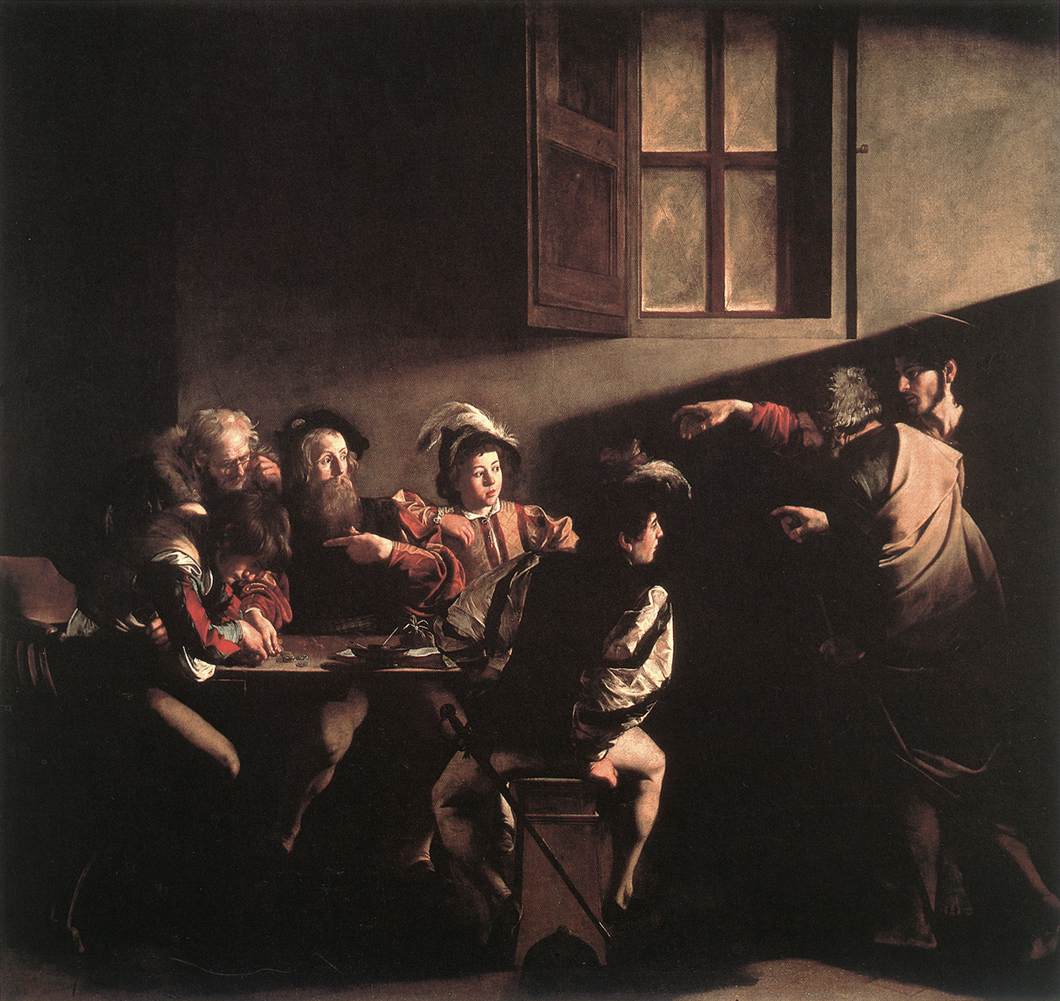
Caravaggio - The Calling of St. Matthew

Caravaggio: The Calling of St. Matthew

I recently preached a sermon on “The Gift of Singleness,” based on Matthew 19:10-12. The main point of that text—and therefore the sermon—was that for those called to it, singleness should be received as a gift from God. I organized the sermon into three points to help unpack and support that thesis:

  1. “The Gift is Given (vv. 10-11)”
  2. “Circumstances are Seen (vs. 12)”
  3. “Singleness is Savored (vs. 12)”

So that is where we are going.

Continue reading

Coming Out Orthodox, Revisited*

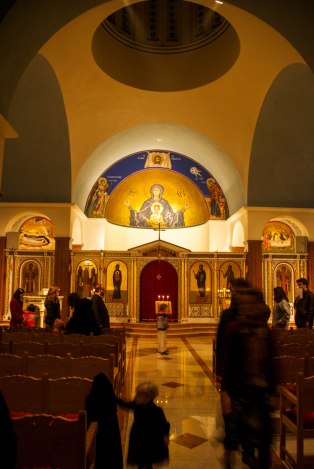
Holy Cross Chapel

Copyright 2012, Gregg Webb

I don’t know what to do about homosexuality. What I do know, however, is that what I have written here is my understanding of what God and Christ would have us do, according to the scriptures, sacraments, and saints of the Orthodox Church. Perhaps I am wrong in my understanding of Christianity and Orthodoxy. Perhaps Orthodoxy is wrong in its understanding of God, Christ, and humanity. Millions of people, heterosexual and homosexual, certainly think so. Whatever the truth, and whatever God’s will for us creatures, I live with the constant awareness that I will answer for what I have written here. I will answer before God. And, in a sense even more terrifying, I will answer before Sharon Underwood and her son, and my friend, and all who try to make sense of life in this world, and to do what is good and right for everyone.

I ask all people’s friendship and forgiveness.

–Fr. Thomas Hopko, from the original forward to Christian Faith and Same Sex Attraction: Eastern Orthodox Reflections recently published in Ancient Faith Publishing’s updated edition of his book.


As I think about what an Eastern Orthodox discussion of homosexuality and gay marriage should look like, this forward by the late Fr. Thomas Hopko comes to mind. Fr. Thomas speaks with both humility and with confidence in his words, but more importantly he speaks knowing that he is talking about an issue that impacts real men and women who are trying to live their lives as best they know how. Recently the Eastern Orthodox Church has had a surge in official statements on gay marriage as a result of the Obergefell v. Hodges decision by the US Supreme Court.

While all of these statements were theologically accurate, most seem to be written with only a passing nod to pastoral care for the sexual minorities within their communities. Rather than engaging in the difficult conversation of what effective pastoral care for sexual minorities within the Orthodox Church could look like, I feel that they took the easy road and restated the same, already published, views again. The last thing I want is for the theology and tradition of the Church to change regarding the issue of same-sex erotic relationships, but the time has come to look at how the Church practically ministers to its LGBT members.

Continue reading

Spiritual Friendship and Courage: On the Need for Variety in Ministry

[In the time since I wrote this post, I have learned of serious problems in Courage with respect to the sexual abuse scandal. Due to the failures of Courage leadership in responding to these problems, I no longer support the positive view of Courage I took in this post.]

This post is a somewhat tardy response to a question about Spiritual Friendship and Courage that Fr. Matthew Schneider asked last month:

First, the short, un-nuanced version: I think that each movement has something positive to contribute to the Church. Courage provides anonymous support groups, while Spiritual Friendship is more public and works toward the day when gay and lesbian people can receive all the support they need in their families and parishes. Both of us agree that friendship is important for those who are trying to grow in chastity. Like the Pope, Spiritual Friendship is comfortable using the word “gay” to describe attraction to the same sex, while many in Courage misunderstand and criticize us for this. Spiritual Friendship tries to talk about the difficult intersection between friendship and same-sex desire in a way that takes the Catholic moral tradition seriously. Some (though not all) writers at Spiritual Friendship have some reservations about the 12-Step model Courage uses. And we all disagree in varying degrees with the Freudian theories of causation that Courage has adopted, though we haven’t made attacking those theories a priority.

Now, the much longer, more nuanced version. (Because this is a large topic, this is, unfortunately, a long post. In order to make it a little bit easier, I have broken it up into sections addressing different parts of the discussion. It may be easier to come back to it and read it a bit at a time, rather than trying to read the whole article at once.)

Continue reading

“Loving Men”

Brent Bailey, a personal friend to many of us who blog here and author for the past several years of a blog about being gay and Christian called Odd Man Out, has just posted for the first time about his celibacy. He frames the post, in part, around a conversation he and I had the first time we met in Chicago:

By the time I met Wes during my second year of graduate school, I had begun to wonder whether my [sexual] orientation was only a temptation to be resisted or whether it might also hold some unexpected potential for grace. Wes and I happened to attend the same academic conference, and I jumped at his invitation to join a few others for lunch. I don’t recall the particular anecdote he told in that makeshift conference hall cafe, but I remember its punchline: “…and I realized that God is not calling me to not love men.” (He would later nuance the sentiment with more specificity: “God is radically pro-same-sex-love, and I know I am called to intimate friendships with other men.”) Of course, I thought to myself that day and in the months and years that followed, of course God isn’t calling me to not love men. What Wes offered as insight struck me, in that moment, as epiphany that illuminated my experiences in friendship. After coming out publicly, I found myself delighting in certain men in a way that was distinctly gay but also chaste, and my delight presented itself as the kind of supportive, unrestrained love that fosters affinity and trust. The same seems to hold today: When I allow myself to participate in the active work of loving men in the particular way I seem wired to love men, I can love them wholeheartedly. It’s sexual but entirely nonsexual; it’s platonic but electrically non-platonic; it’s confusing but profoundly satisfying.

In his own way, with his unique approach and style, Brent is putting his finger on a major theme that a lot of us who blog here at SF have united around: You have to think about your life of chastity as a gay Christian as a life of self-giving love. If you try to understand it only in negative terms—as if the goal were only abstention and refraining and fleeing and turning away—you will end up missing the main thing God is calling you to. You will end up with a white-knuckled version of Christian discipleship rather than one that revolves around Christlike generosity, hospitality, and loyalty to others. Around here at SF, we’re all agreed that gay sex misses the mark of God’s design for human flourishing, but we’re also persuaded that “not having gay sex” shouldn’t be the main goal of anyone’s life.

Continue reading

Shared Roads for Fellow-Travelers

Near the beginning of Lauren Winner’s newest book, there’s this passage:

What do I know about friendship from close to four decades of being, or trying to be, a friend?

I know that friendship both requires and breeds honesty—perhaps foremost honesty with myself. When I am lying to myself (as I have been known to do, usually about something important—otherwise why bother?), I am not available for friendship.

I know that friendship is rich and delightful. I know that I could live anywhere if I had two or three real friends.

I know that friendship is often supported by institutions and the structures they provide. A few years ago, the rector of the church where I served as a priest associate left for another job. The moment she announced she was leaving, I began to dread the ways our friendship would suffer—and it has. It hasn’t disappeared, but now it is entirely dependent on our free time and our admittedly plentiful affection for each other. We manage to meet for a cocktail about every four months, which is better than nothing but a lot more fragile than when we not only adored each other but also shared common work and common concern for a parish. Likewise, I do not look forward to the day I stop teaching at the women’s prison with my friend Sarah. I have buckets of affection for her, too, but it is a relief that we have something to talk about other than current events and our petty domestic squabbles; we also plan syllabi together, and think together about what our students need from us, and argue about which books to assign. Friendship benefits from the support of institutions: classes taught together, church bazaars planned together.

That third point especially stands out to me. You might think of it as an illustrative riff on C. S. Lewis’ opinion: “Friendship must be about something, even if it were only an enthusiasm for dominoes or white mice…. [T]hose who are going nowhere can have no fellow-travellers” (italics added). Friendships are propped up, energized, and sustained by shared inquiries, tasks, projects, and investments. Friendships thrive on “institutions.”

Continue reading

Interview: LGBT Youth and Homelessness

The best available research suggests that between 20 and 40 percent of homeless youth identify as lesbian, gay, bisexual, or transgender. When youth come out (or their sexuality is discovered against their will), some families reject them, pushing them onto the streets, where they are often even more vulnerable to prejudice and abuse than other homeless youth. They will also encounter a legal system which can be more focused on punishing and imprisoning the homeless than on helping them to get off the streets. And as rising social and peer acceptance has emboldened teens to come out at a younger age, more youth are over-estimating their parents’ readiness to deal with revelations about their sexuality, with tragic—even life-threatening—consequences.

This is a problem which Christian parents and pastors need to understand and take much more seriously, since it is, in part, an unintended consequence of Christian activism for traditional marriage. Moreover, since Christian ministries often provide food, clothing, and shelter to the homeless, how they approach homeless LGBT persons will have a big effect on whether their ministry draws people toward Christ, or pushes them away.

In order to provide better perspective on these pressing issues, we recently spoke with Kelley Cutler, a Catholic social worker and advocate on homelessness who has worked in San Francisco for over a decade. She shared some of her insights about homelessness, how it affects LGBT youth, and how Christians can respond.

Kelley-Cutler
Continue reading