Sin and Sexual Minorities Part 1: Introduction

In Christian discussions about sexual identity issues, the notions of “sin” and “morality” often come up. Typically, gay sex is in focus. There are often complaints about how the gay community is promoting particular sins or forms of sexual immorality. As someone who holds to a traditional understanding of sexual ethics, I agree with some of these concerns.

However, I think this is a far too limited way to view sin and morality. Christian morality cannot be reduced to sexual ethics; other issues are critically important as well. Furthermore, many complaints by Christians demonstrate much greater concern about certain sins committed by sexual minorities than about sins committed against sexual minorities, if sins against sexual minorities are acknowledged at all. Sins against sexual minority people are in fact serious and common, and as Matt Jones discusses in “What Is Love?,” true concern for sexual minorities requires us to acknowledge and fight these sins.
Continue reading

Dorothy Sayers on Modernity’s Sexual Malaise

In her essay, “The Other Six Deadly Sins,” (collected in Creed or Chaos) Dorothy Sayers writes:

There are two main reasons for which people fall into the sin of Luxuria [lust]. It may be through sheer exuberance of animal spirits: in which case a sharp application of the curb may be all that is needed to bring the body into subjection and remind it of its proper place in the scheme of man’s twofold nature. Or—and this commonly happens in periods of disillusionment like our own, when philosophies are bankrupt and life appears without hope—men and women may turn to lust in sheer boredom and discontent, trying to find in it some stimulus which is not provided by the drab discomfort of their mental and physical surroundings. When that is the case, stern rebukes and restrictions are worse than useless. It is as though one were to endeavour to cure anaemia by bleeding; it only reduces further an already impoverished vitality. The mournful and medical aspect of twentieth-century pornography and promiscuity strongly suggests that we have reached one of these periods of spiritual depression, where people go to bed because they have nothing better to do. In other words, the “regrettable moral laxity” of which respectable people complain may have its root cause not in Luxuria at all, but in some other of the sins of society, and may automatically begin to cure itself when that root cause is removed.

Vocation Roundup

Vocation is one of the core ideas that guides our writing at Spiritual Friendship. Indeed, to be spiritual friends means to help each other respond to God’s call to love Him and to love our neighbor.

God gives each person gifts, and along with the gifts, a calling to build up the Body of Christ in some particular way. At the same time, our calling is connected with our way of life: are we called to marry or to remain celibate? What kind of community are we called into?

This post provides a roundup of some of the ideas writers at Spiritual Friendship have shared as we have reflected on God’s calling.

Continue reading

When the Gay Eclipses God

I fell in love with Jesus when I was a little girl. I remember sitting by the pond with my blue Snoopy fishing pole, marveling over the magnitude of the story of Jesus in my soul. Something about the stars and still water and inner dialogue with the writer of the world moved me to wonder. I memorized the book of Philippians when I was in middle school because I was captured by the God Paul described when he counted all things worth losing in order to know Christ—in order to connect with his creator. My understanding of what it all meant was surely immature, but I understood the message even more than I do now: Jesus Christ is the most magnificent, beautiful, breath-taking reality in the world, and if you get nothing else for the rest of your life then get Jesus.

Continue reading

Reflections on Russia

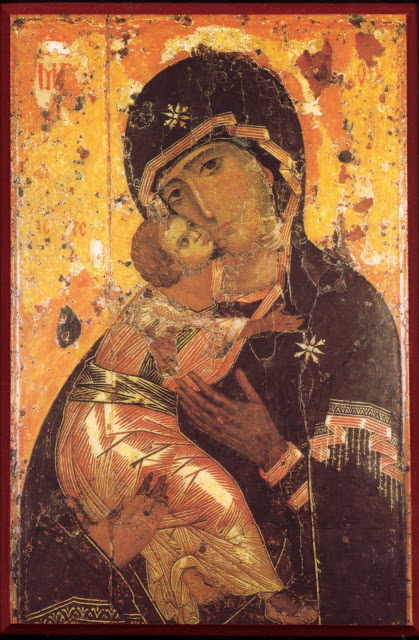
Vladimir Mother of God IconI grew up in the Eastern Orthodox Church and continue to call her home so whenever I see her handling the topic of homosexuality poorly it grieves me. This has never been so true as with the continued debate in Russia over the rights of its LGBT citizens. I feel very strongly that there must be a better way to discuss family values and uphold the basic rights and safety of a country’s citizens than Russia has been demonstrating. The Russian Orthodox Church’s involvement in the current debate only adds additional hurt and only legitimizes the Russian government’s persecution of LGBT people.

Continue reading

A Note on Jesus and “Masculinity”

Looking through some old files on my computer today, I stumbled across an essay by Michael Horton, professor of Westminster Seminary in California, taking on the “New Calvinists”’ recent fixation on a certain version of “masculinity”. My early spiritual and theological formation happened in the evangelical Reformed wing of Christianity, and I continue to follow many of the discussions happening in Reformed circles. So this was doubly fascinating to me:

In the drive to make churches more guy-friendly, we risk confusing cultural (especially American) customs with biblical discipleship. One noted pastor has said that God gave Christianity a “masculine feel.” Another contrasted “latte-sipping Cabriolet drivers” with “real men.” Jesus and his buddies were “dudes: heterosexual, win-a-fight, punch-you-in-the-nose dudes.” Real Christian men like Jesus and Paul “are aggressive, assertive, and nonverbal.” Seriously?

The back story on all of this is the rise of the “masculine Christianity movement” in Victorian England, especially with Charles Kingsley’s fictional stories in Two Years Ago (1857). D. L. Moody popularized the movement in the United States and baseball-player-turned-evangelist Billy Sunday preached it as he pretended to hit a home run against the devil. For those of us raised on testimonies from recently converted football players in youth group, Tim Tebow is hardly a new phenomenon. Reacting against the safe deity, John Eldredge’s Wild at Heart (2001) offered a God who is wild and unpredictable. Neither image is grounded adequately in Scripture. With good intentions, the Promise Keepers movement apparently did not have a significant lasting impact. Nor, I predict, will the call of New Calvinists to a Jesus with “callused hands and big biceps,” “the Ultimate Fighting Jesus.”

Are these really the images we have of men in the Scriptures? Furthermore, are these the characteristics that the New Testament highlights as “the fruit of the Spirit”—which, apparently, is not gender-specific? “Gentleness, meekness, self-control,” “growing in the grace and knowledge of the Lord Jesus Christ,” “submitting to your leaders,” and the like? Officers are to be “apt to teach,” “preaching the truth in love,” not quenching a bruised reed or putting out a smoldering candle, and the like. There is nothing about beating people up or belonging to a biker club.

Continue reading

Sexual Ethics and the Trinity: A Follow-Up

Yesterday’s post on Sexual Ethics and the Trinity was mostly very well received (for which I am grateful). But I did get some criticisms, which I’d like to try to respond to. (I suppose it’s inevitable, when you try to push the conversation in a very different direction, that some readers will not understand where you are going.)

Social and religious context

Why did I write this in the first place? What problem was I trying to address?

In the last 40 years, western culture has gone through a profound shift in its understanding of marriage, human sexuality, and procreation.

This shift has also affected Christians in various ways. In the Catholic Church, contraception, remarriage after divorce, and same-sex unions remain contrary to Church teaching, but this teaching does not receive anything like universal assent in the pews. In other Christian communions, there have been divisive debates about a variety of issues in sexual ethics, with varying levels of official acceptance of changing attitudes toward sexual ethics.

Continue reading

Sexual Ethics and the Trinity

God reveals Himself primarily as Father. What does that mean for our understanding of marriage?

Even in Christian culture, marriage is often seen primarily as a romantic and erotic union between a man and a woman. Thus, it has become more and more common, when we want to speak theologically about marriage, to talk about the image of Christ as the bridegroom of the Church.

Moreover, the widespread availability of contraceptives has made children seem a somewhat secondary, and voluntary, addition to marriage. Christians are not as inclined to reflect deeply on the connection between marriage and children as earlier Christian generations did.

Continue reading

The Many Facets of Christian Friendship

This may be of interest to some of our readers: The Washington Institute for Faith, Vocation, and Culture is featuring several pieces on friendship on their website at the moment. Logan Melh-Laituri writes movingly about broken friendships, reconciliation, and friendship with God. Another piece, originally a sermon given at The Falls Church in Virginia by Rev. Bill Haley, is largely about practices that can nurture friendships. Finally, Steve Garber reflects on the relationship between marriage and friendship, about how “if the truth about marriage is that it is a long friendship, not a long date, then much more attention ought to be paid to learning to be friends.”

My favorite line was from Melh-Laituri’s piece: “Friendship simultaneously requires and creates the kind of faith that Christians are called to.”

There’s much food for thought here.