The Luxury of Division

First: Julie Rodgers (who apparently isn’t dead, despite the funerary tone of many articles) is a dear friend who has endured far more gross scrutiny with far more grace than most people would be capable of. Her urgent passion to serve those who have been marginalized by society has made the world a better place, and I am sure that wherever she decides to minister next she will witness to God’s love through deep friendships, hospitable spaces, and simple human kindness.[1]

Second: A few years ago I was visiting a small Palestinian town that had lost much of its surrounding land to illegal settlements and was facing restricted access to its ancestral olive groves. After a Catholic mass in the morning we all (local Catholics included) attended a lunch hosted by the evangelical church before being shown around the village by the Greek Orthodox priest. I couldn’t help but marvel at the familial closeness displayed between those from various church traditions as they worked together to welcome this obtrusive group of college students into their threatened home. It was more than mere cooperation; it was genuine friendship.

While chatting with one of the hosts I mentioned how struck I was by the ecumenical character of the village and the solid relationships between the different Christians. He tilted his head. “Our land is being stolen, people are leaving, the olive groves are being terrorized, and we are at risk of forgetting who we are. Unlike some places in the world, we do not have the luxury or the time to be divided.”

In 21st century American churches, however, division seems to be almost all we have time for.

Continue reading

Forsaking All Others

For one of my graduate school classes last year we learned to create lists of goals with a counseling client, a process called “goaling.” Our professor went through the process with a classmate and then asked each of us to break up into pairs and work through goaling with our partner. After dictating to my partner, a close friend of mine, we were instructed to begin talking through how to order them and to make sure they were just hard enough to be difficult but not so difficult as to be impossible. After doing this together I had assembled what I felt was a good list. It covered the major areas of my life: spiritual, educational, personal, and financial. My partner felt that after looking at my list something was missing. He didn’t say what he thought that could be other than that it just felt like my list was missing something. At that point it dawned on me the things that everyone else in my class’s list included but were missing from mine. So I leaned over to complete my list that he had been recording on his laptop and wrote the following at the top of my list:

  1. To marry the man I love.
  2. To have a family who is centered on Christ and that we would grow closer to Him and to each other.
  3. To have a home that is a refuge for many.

After writing these it took me a moment to absorb the shock of actually verbalizing these desires. My friend was then satisfied that I had written an honest list rather than merely the list I felt I should write. After looking at it for a moment I then deleted the three additions and left the list as it was originally.

18774654108_9b396b2eee_b

Copyright 2015 Gregg Webb

Continue reading

Matt Jones at OnFaith: Avoiding Hypocrisy as the Church

matt_001Spiritual Friendship writer Matt Jones recently contributed to a series on sexuality and the church over at OnFaith, focusing on ways his current church community is modeling a traditional sexual ethic that avoids much of the hypocrisy found in more conservative churches. Some excerpts:

When I joined, I simply became a part of that redemptive movement. This is an enormous blessing, because — believe it or not — I really want to proclaim the gospel through ministry and advocacy. (And, as a white dude brimming with privilege, learning how to do this in a way that doesn’t reinforce inequality can be a challenge!) I want to be a Christian, and I want my church to urge the congregants on in our shared vocation of pursuing justice for the marginalized (which includes a sizable portion of the church population itself).

Often lgbt+ Christians are treated as if we have one job this side of Jesus’ return: don’t have gay sex. But, as Eve Tushnet so quotably stated, “You can’t have a vocation of no,” of only avoiding something. We need something to live for, and let me say that Christianity never makes more sense to me than when I am witnessing or participating in a Christian community that is unified toward imitating and proclaiming Jesus’ liberative gospel.

And:

It continues to amaze me how hard celibate lgbt+ people have to work to find space in churches that claim a more traditional sexual ethic. The social burdens experienced by sexual minorities in these communities vary widely, but usually include increased scrutiny and suspicion, painful comments from congregants who may or may not know about one’s sexuality, reduced ministry possibilities (e.g. I was once stripped of an internship and prevented from helping with a youth group because I wasn’t trying hard enough to be straight), insanely exhausting language policing,**** and at times, the general ache of being single in a culture that over-valorizes marriage and romance to the detriment of thechurch’s calling to be family.

I’m not sure how churches decided that the best ‘defense’ of the traditional sexual ethic is to place excessive burdens on those trying to abide by it and then fail to provide the support structures that would make such an ethic intelligible and healthy . . . but, well, here we are.

I believe the traditional sexual ethic is beautiful and good — I try to live according to it for a reason! — but I also believe that the way churches have approached the topic of human sexuality has largely failed to do any justice to the scope and nuance of the doctrine and has, in fact, done injustice to countless people who should have found a home and family within the church, and this requires sincere repentance.

Read the Whole Article at FaithStreet.

The “Benedict Option” and the Dazzled Pagan Eye

After yesterday’s SCOTUS ruling on same-sex marriage (about which more here), there’s been a lot of chatter in my Twitter feed and email inbox about the so-called “Benedict Option”—the view that we traditionalist Christians, who continue to believe that marriage is the lifelong union of one man and one woman, are in a kind of cultural exile and that our calling, therefore, is to “a limited, strategic withdrawal… from the mainstream of American popular culture, for the sake of shoring up our understanding of what the church is, and what we must do to be the church” (as Rod Dreher puts it). In other words, a lot of my orthodox Christian friends are asking what it looks like to be faithful to Christian teaching now that the state’s definition of marriage diverges so widely from the church’s biblical and traditional definition.

One of the earliest posts I read on this approach was by the Duke Divinity School theologian Paul Griffiths, published years ago on his now (alas!) closed-down blog. Probably around 2006 or 2007, from what I can remember, Griffiths wrote this:

In the America of our day, it is about as difficult (or as easy) to make what the Church teaches about marriage comprehensible and convincing (the latter more difficult than the former) to the educated locals as it is to make the doctrines of the Immaculate Conception or the Real Presence so.

If that empirical claim is right… , then the conclusion strongly suggested by it is that the Church should not, at the moment, oppose legal recognition of same-sex unions. Those who have undergone a profoundly pagan catechesis on these questions will believe and behave as pagans do; it would be good for them and for the Church if the Church were not to attempt to constrain them by advocating positions in public policy based upon the view that what she teaches resonates in all human hearts—because it doesn’t, true though it is.

What the pagans need on this matter is conversion, not argument; and what the Church ought to do to encourage that is to burnish the practice of marriage by Catholics until its radiance dazzles the pagan eye.

Griffiths has since the time of this writing apparently shifted his views on same-sex marriage, but I’m not interested in exploring that change here. What I am interested in is Griffiths’ final sentence from this old blog post, which has haunted me ever since I first read it: The church’s calling now, and all the more so now that Griffiths’ hypothetical legalization of same-sex marriage is now the law of the land, is to burnish the practice of marriage until its radiance dazzles the pagan eye.

On the surface of it, I’m not sure how that strategy would work. How is it that Christians’ purifying of their own male-and-female marriages will work to convince, say, a happily satisfied pagan couple to give up their gay sex and convert to traditional Christianity? How is that, to return to the Benedict Option mentioned above, Christians’ strategic withdrawal from mainstream culture and our commitment to our own re-conversion will prove attractive to an indifferent, or hostile, pagan world?

I’m not sure what the answers to these questions are, but I am increasingly convinced those are precisely the questions to ask.

But let me go ahead take a stab anyway at imagining some answers.

Continue reading

Matt Jones Podcast at Seminary Dropout

Recently, SF contributor Matt Jones was featured on Shane Blackshear’s podcast Seminary Dropout, which has previously featured (immensely cooler, he thinks) authors and speakers such as NT Wright, Walter Brueggemann, and Christena Cleveland.

matt_001

The podcast begins with some autobiography, then covers a range of topics touching on faith, sexuality, and how the ‘culture war’ mentality has deeply harmed the church’s community life and pastoral witness.

Check it out!

Sherif Girgis: Called to Greatness

Sherif GirgisLast week, I was invited to join Sherif Girgis (coauthor of What Is Marriage?: Man and Woman: A Defense) to speak about marriage at the University of Notre Dame. This week, Ethika Politika has posted a pair of short essays on how American Catholics should move forward in their witness to the truths of marriage and family.

I’m working on a post that expands on my essay. In the meantime, I think Spiritual Friendship readers will find Sherif’s thoughts on vocation helpful.

Why are we losing the culture wars on family? One simple reason is that for years, young people have been told that our (natural-law, Judeo-Christian) vision of marriage is cruel.

That charge has been internalized. Many LGBT people my age don’t call us cruel for political advantage, or out of trained melodrama; they really believe it. Their belief doesn’t make our message cruel, but it makes their experience one of real pain. And pastorally, that’s what counts.

One thing we can do for these brothers and sisters of ours is to remind them of what they can do for us—of what we need them to do. For while fear of loneliness may give many LGBT youth pause about our ethic (a topic for another essay), I suspect a second common fear is of ennui or despair: the dread of being Christians “consigned” to singleness, with nothing positivedemanded of them, by the Church or the wider culture.

That is, behind the LGBT cry for dignity may be the sense that social standing comes from being needed by the community, which comes from having publicly recognized responsibilities—which nowadays only marriage seems to offer.

Read the whole essay at Ethika Politika.

Day of Silence

Spiritual Friendship does not have a lot in common with the Gay, Lesbian & Straight Education Network (GLSEN). On most questions related to sexuality, we hold positions very different from theirs. It is unlikely that they would endorse our approach, and we do not endorse theirs. But we do share a concern with the way sexual minority youth are treated. Two years ago, Jeremy Erickson wrote a post about the Day of Silence, which also linked to this 2010 Day of Silence post from Disputed Mutability, who is a friend of this blog. Jeremy also recommended Bill Henson’s Lead Them Home and Shawn Harrison’s six:11 Ministries  as organizations that address anti-gay bullying in a way that is faithful to a traditional Christian sexual ethic.

Some Christians have raised the concern that anti-bullying efforts like the Day of Silence can be used to silence Christians. I believe that the most effective way to address that problem is to make it clear that traditional Christian convictions about sexual ethics are no barrier to acknowledging and trying to fix the bullying that LGBT youth experience. I think that all bullying is important and needs to be addressed. But in order to do that effectively, it’s not enough to just say “bullying is bad.” We need to understand different types of bullying and make sure that our anti-bullying policies are adequate to address all of the problems that need to be addressed. And that means understanding and specifically addressing the concerns of sexual minority youth.

I am not involved with either primary or secondary education. I am not, therefore, in the best position to make policy recommendations, or even to understand fully what the actual situation on the ground is today. I imagine it is quite different from what it was when I was in high school, but I believe that, in at least some parts of the country, the environment is still quite hostile for LGBT youth.

Dante0097And in one respect, at least, I know that the problem is much worse now than it was in the early 1990s. When I was in high school, I remember homosexuality being mentioned only a half dozen times or so at church. Today, the discussion is inescapable. And as difficult as some of the things I experienced in my teens were, I never had to read a Crisis Magazine comment thread. Internet comments sometimes bring out the very worst in human nature, and if I had read some of those comment threads as a teen, I think it is quite possible I would have been permanently alienated from Christian faith. Jesus said, “Whoever receives one such child in my name receives me, but whoever causes one of these little ones who believe in me to sin, it would be better for him to have a great millstone fastened around his neck and to be drowned in the depth of the sea” (Matthew 18:5-6). Many of the comments about homosexuality at Crisis and other Christian publications are a very public expression of the deadly sin of wrath. This calls for a serious examination of conscience and a repentance that is as public as the original sin. Only public humility and repentance can begin to undo the damage to Christian witness done by this kind of public self-righteousness. In this regard, it’s worth remembering that Jesus was not crucified by a conspiracy of sexual sinners: it was the self-righteous religious pundits of His day who plotted to have Him murdered. 

In this post, I want to talk a bit about my own experience, in order to highlight some of the ways that it is difficult to be sexually different in adolescence—especially in a culture like ours, which makes sexuality so central to identity, and is divided by such sharp conflicts over sexual ethics.

Continue reading

Matthew Loftus on Wesley Hill’s Spiritual Friendship book

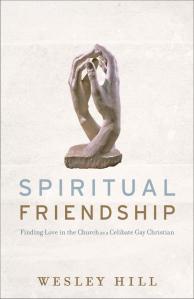
SF book coverMatthew Loftus has written a review of Wesley Hill’s new Spiritual Friendship book for MereOrthodoxy. Titled “Material Dimensions of Spiritual Friendship,” Loftus’s essay offers a brief summary of the book, and explores three questions about spiritual friendship, culture, and mission that arise both from his own experience as a doctor in inner city Baltimore and from the challenges Wesley raises in the book.

Wesley Hill’s new book Spiritual Friendship is not an easy read. It’s short, yes, coming in at under 150 pages. But in that space Hill manages to be disquieting on a subject that is often taken for granted–specifically, the question of how we form and maintain intimate friendships. Part historical survey, part Biblical analysis, and part personal reflection, Spiritual Friendship manages to be informative and insightful but also unnerving and challenging. Rather than a full review, I’d like to briefly summarize the themes in the book and then respond to some of the questions that it raises. Since Wesley grounded his exploration of friendship in his experiences and friendships, I’d like to do the same as I recount some of what my wife and I have learned from our time in inner-city Baltimore.

The first part of the book looks at the situation we are in with regards to friendship, using the author’s own experience as a celibate gay Christian as a jumping-off point for how much more anemic our honor of friendship is now–particularly same-sex friendships– than they apparently used to be. He assigns as much blame for the decline in friendship’s power and privilege to the modern instinct that boils every interaction down to its sexual nature as he does to the reactionary traditionalism that wants to elevate marriage well beyond all other human relationships. What we’re left with nowadays is friendship as purely voluntary, thus making the idea of intimacy and mutual comfort wholly dependent on the whims of our friends. Wesley’s Christianity Today cover story from last year covers many of these same themes in a more compressed fashion, which lead to a great discussion of vowed friendships in particular here at Mere Fidelity.

In the second half of the book, Wesley gets more personal as he looks at how difficult these intimate friendships are to build and maintain. Regardless of one’s stance on questions of gay identity, it is hard not to be moved by the quandary he puts forth: gay and lesbian Christians who choose to honor the Biblical teaching by remaining celibate (and all Christians who don’t marry) are shut out of the intimate companionship that marriage provides–erotic or not–and so far have been left to their own devices to find ways to ameliorate the attendant loneliness and isolation they face. He relates the moving story of how one particular friendship fell apart and concludes the book with a chapter about how his local church has been trying to find ways to foster friendship–and how powerful the Eucharist in particular can be in unifying us as a community. However, these relationships are still incredibly vulnerable to the mobility many of now experience as we transition from wherever we grew up to wherever we study to wherever we find a job thereafter. While never really resolving the tension inherent in this mobility, he emphasizes the importance of friendships that require serious commitment to one another, particularly as they give us the opportunity to suffer together and share in the burdens that come to all believers–not just the celibate.

There’s obviously a lot more in the book than what I’ve summarized above, but I want to emphasize that the book left this reader feeling incomplete, asking more questions than when I started. I suspect that this is by design, though it is a book that stands on its own even as it complements the body of work accumulating at the blog Wesley helped to start (https://spiritualfriendship.org/). The three lines of thought I’d like to explore are: What else has fueled our cultural denigration of friendship besides our changing cultural mores, and can we change these upstream factors? How do we think about intimate spiritual friendships across class lines, and is there a particular call to suffer there? Finally, to what degree does our understanding of the local church and its mission affect how we forge our friendships–or is it the other way around?

Read the full review.

Wartburg Watch: Even Celibacy Is Not Enough for Some Christians

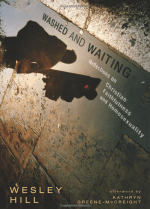
Washed and WaitingOver at a blog called The Wartburg Watch, there’s a nice discussion of Spiritual Friendship and some of the challenges we’ve received from conservative critics. The post (and the blog) may be of interest to some of our readers.

Years ago, when my little daughter was suffering from brain tumor, I felt overwhelmed with the difficulties of managing my other children while coping with my own feelings of overwhelming pain for my daughter and fear for her future. My husband had to maintain his job so that we had the insurance to help pay for the medical bills. I felt quite lonely even though I had wonderful friends who supported me, helping with my other children and making meals for us. How does one explain the pain and fears to others who are not experiencing it?

I was directed to a group that dealt with the difficulties of having a child with a serious brain tumor. I found great comfort in the group as we discussed our issues. Children’s Hospital in Dallas provided professionals to help us work through all sorts of things. It was so comforting to be with a group of people who got it even if I didn’t say a word.

I grew to understand the importance of the support such groups offer. We formed friendships and held each other up through the inevitable pain and sorrows that arose.

That is why I was excited when I learned about the development of Spiritual Friendship amongst celibate gays. Before I go any further, I would ask that we keep this discussion centered around those gay Christians who have decided that they believe they should remain celibate. This is important to this post because I want to show that even when individuals make decisions that should be acceptable to conservative Christian, they still get criticized.

Check out the whole post.

My Friendship with Ron Belgau

One of the things I’d like to do more often here at Spiritual Friendship is tell stories of friendship. Theological reflection, of the sort I usually do in my posts, can only go so far. What we need more of—what I need more of—are stories of real life friendships that describe how vital Christian friendship can be.

With that in mind, I’d like to pay tribute to my friend Ron Belgau in this post. Ron and I met initially via email, through a mutual friend. When he expressed appreciation for my first book, Washed and Waiting, I asked him to share further thoughts on it. Then, due to how thoughtful and rich his response was, I decided I couldn’t answer it until I had time to produce an equally thoughtful and rich reply—which meant that I stayed silent for about six months. Ron waited patiently, and then he wrote again, and from there our friendship took off. We wrote, we talked via Skype with him in the U.S. and me in England, and, eventually, we had the chance to meet in person at a speaking gig I had and enjoy a long walk along the Battery in Charleston, South Carolina.

Out of those conversations, we started a private online gathering for gay/lesbian/SSA Christians who wanted to try to live by traditional biblical sexual ethics. The conversations we helped nurture there were among the most significant I’ve been a part of. And, eventually, they became the basis for what Ron and I are trying to do here with SF, the sort of public face of our earlier private effort.

Continue reading