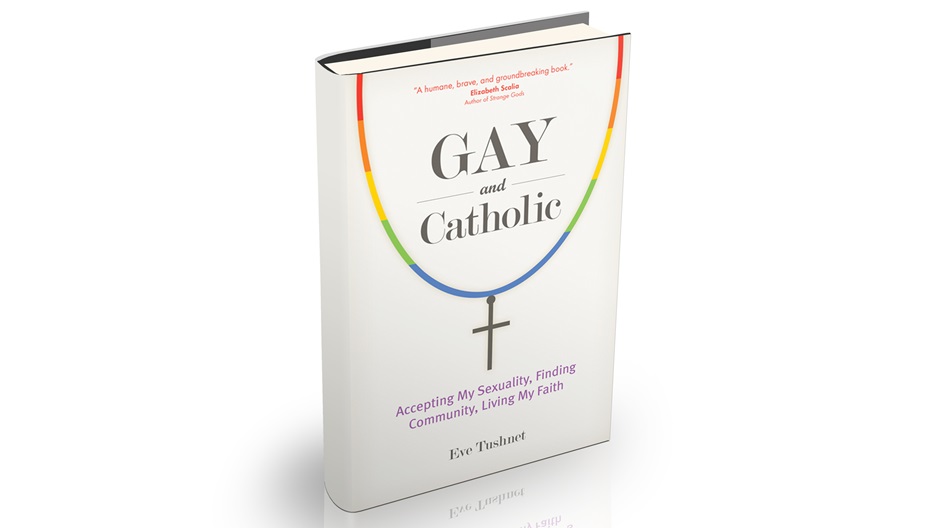
Three Cheers for Eve Tushnet!

Tushnet book cover

Over at Christianity Today, I’ve got a review up of our own Eve Tushnet’s new book Gay and Catholic: Accepting My Sexuality, Finding Community, Living My Faith.

The first part of the review is my very personal story of stumbling upon Eve’s blog—now hosted by Patheos—several years ago:

Sometime in 2007 I discovered Eve Tushnet’s writing. I can’t recall exactly how I found her non-flashy, off-the-beaten-path blog, tagged with the teasing moniker “Conservatism reborn in twisted sisterhood,” but somehow I landed there, following a trail of hyperlinks. I used to read her posts in the morning, while sipping coffee, huddled over my laptop in my cell-like flat in England, when I was just starting graduate school.

Tushnet is a gay Catholic writer who embraces her church’s teaching on marriage and sexuality. By the time I learned about her, I’d been admitting to myself for a few years that I was gay, though I hadn’t told many other people yet. I was still too frightened and unsure of what kind of welcome (or lack thereof) I’d receive. You know those novels and movies about the yearning, aching twentysomethings who are trying to disentangle and sort out their erotic and religious longings, while dreading loneliness and rejection above all else? That was me. Imagine Charles Ryder from Brideshead Revisited, all angsty and insecure, but with a small-town-USA upbringing, and you’ll get the picture. I needed a lifeline. I was hungry to know I wasn’t alone.
Continue reading

Before and After

This is the manuscript I spoke from when I gave a talk last Friday, February 6, in a chapel service at Houghton College in New York.

This morning I want to talk about before and after.

We often tell our stories using those words—before and after.

It’s the language we are given in church. “I once was lost, but now am found / Was blind, but now I see,” we sing.

Before and after.

It’s the language of our “testimonies,” if you grew up in a church that had those. “Before I came to faith, I was wandering far from God. But now, after I met Christ, I am different.”

It’s also the language of the Bible. Jesus tells a story about a young man who bilked his father for his inheritance, burned through it on wild parties and rebellious behavior, and then came to his senses, having hit rock bottom. He gets up and begins to walk home and before he can even utter an apology, his father is already stringing up the “Welcome Back” banner and catering a big feast in his honor.

Before and after.

I’d like us to spend a few minutes looking at one of the stories in the Gospels. I want to tell you my personal “before and after” story, but before I do that, I want us to hear from Jesus.

In the Fourth Gospel, chapter 9, there is a character who was born blind. And Jesus sees him on the side of the road. Turning to him, Jesus says, “I am the light of the world,” and then, memorably, he spits on the ground, makes a paste of mud and applies it to the man’s eyes, and then tells him to go and wash in the pool of Siloam. “Then,” the Gospel says, “he went and washed and came back able to see.”

This is a very famous “before and after” story. But the “after” part isn’t exactly what we might expect.

Continue reading

The Cloud of Witnesses

Copyright Gregg Webb 2012

Copyright Gregg Webb 2012

There are a number of factors that contribute to my conservative views as a celibate-gay Christian. The traditional view of marriage that I’ve held my whole life rests on several things and goes beyond the main passages of scripture that are so often brought up. Scripture is of course foundational for many of my beliefs regarding my sexuality as are the consistent teachings of the Church for over two millennia; they aren’t however the strongest day to day reminders of why I’ve chosen celibacy as my path. From my Eastern Orthodox upbringing I’ve grown up with the stories of countless men and women who have followed Christ’s call to take up their cross, deny themselves and follow after him. These saints, and especially the ascetics, are my daily reminder of the well-worn path I pursue.

Certainly many of these saints followed celibacy, often in a monastic context, but it’s not for that reason alone that I feel convicted in my own celibacy. Rather, it is that each and every one of them saw absolutely nothing as being of greater value or worth than Christ. There was nothing exceptionally radical, or out of place in their belief that in their pursuit of Christ everything was on the table, including their very life. Because of their witness, and their lives which we listen to and sing about daily in the Church the idea that surrendering my own desire for romantic intimacy and the erotic expression of that desire was something too great to be asked to give seems less out of place or extreme. That isn’t to diminish the weight and the calling of the Church and of community to help each other bear whatever burden they may be called to endure, but rather helps me place my own suffering and my own self-denial in the ancient tradition of the saints of the Church.

Continue reading

You Can’t Be a Virgin Alone

I was talking a bit this week with Todd Billings, who is a professor of Reformed theology at Western Seminary in Holland Michigan, and he passed along an essay he wrote when he was single and in his late twenties. The piece is a reflection of St. Gregory of Nyssa’s On Virginity, and I found it very engaging.

A sample:

Gregory’s vision of virginal life is one of fullness, not absence. “The more we come to know the wealth of virginity the more we have disdain for the other life, having learned from the comparison how many precious things it lacks.” Divided love — non-virginal love — is poor love.

Indeed, while Seinfeld’s Elaine would be horrified at the thought, Gregory calls attention to the “freedom of virginity.” The virginal soul, its attachments rooted in God, has freedom from “greed, anger, hatred, the desire for empty fame and all such things.” Since the virginal soul does not seek after these other loves, it is not a slave to them. It is free to be a bride of Christ.

Further, for Gregory, virginity is not a curse or an accident, but a “gift” with great “grandeur.” It does not result from God’s failing to provide someone to love, but from “grace.” The virgin anticipates the time when there will be “no distance between himself and the presence of God.” To experience a foretaste of eternal life with God is far from an accident.

We have grown accustomed to seeing virginity in terms of lack — an empty bed, a Valentine’s Day spent alone. But Gregory reverses the imagery. Virginity is a special foretaste of the divine presence, an anticipation of the resurrected state where believers are especially suited to experience this presence. Moreover, for Gregory, virginity is an “ally” and a friend. It accompanies us on the Christian path of rejecting the worldly loves that threaten to displace our love for God. For the Christian, virginity is not about loneliness. Indeed, for the Christian, it is impossible to be a virgin alone.

The whole essay is thoughtful and accessible—do read it all—and it’s doubly encouraging to me to think of it originally being published in the ecumenical magazine Regeneration Quarterly, which had a sizable evangelical readership when it was still in print. Sometimes working against their own history and current church cultures, many Reformed and more broadly Reformational evangelicals whom I know want to try to rediscover and honor celibacy in their churches today. May their tribe increase.

You’re Gay and God Loves You

Just one brief comment on the Christian musician Vicky Beeching’s coming out.

I’ve met Vicky once, when she attended my confirmation in the Church of England at St. John’s College, Durham, where I was based at the time. I was touched that she wanted to attend, and I was grateful for her warm friendliness.

Sean Doherty tweeted yesterday morning after the story was published, “Respect to @vickybeeching today – should not be but *is* still hard to come out and praying for you that you are overwhelmed with support.” I think that’s just exactly right, regardless of where your convictions about sexual ethics fall.

It’s easy for me now, as someone who writes and speaks publicly and frequently about these matters, to forget how difficult it was at first to talk with anyone about my sexuality. Despite the fact that I had a loving, close-knit family, an especially committed group of friends in high school, and an unusually sensitive, thoughtful youth pastor, it still took me until college to tell someone about my feelings. And even then, I was deathly afraid of what my peers would think.

Continue reading

What I Learned From My Ex-Gay Days Part 2: Reflections

In my previous piece, I described my experience trying to change my orientation. As promised, in this post I will discuss some practical insights, many of which extend beyond the ex-gay context in which I learned them.

The most immediate insight is directly about sexual orientation change efforts: change in orientation is not something we should promise. Hope in orientation change can be false hope. This is true even for someone who is willing to put great effort into trying to become straight and, more importantly, dealing with the sorts of issues often claimed to be behind a homosexual or bisexual orientation. It is important that we be honest.

Putting my hope into orientation change had less fallout for me than it had for many others. As a man who was already attracted to women, changing my orientation was never quite about being able to function in a marriage. Remaining attracted to the same sex did not have any particular implication about celibacy; it merely meant that I could not be as normal as I wanted and that I would face negative attitudes from some conservative Christians. I was able to come to an acceptance of this reality. However, other people do experience significant hurt. As I alluded to in the first part, even parents may be unnecessarily hurt when they take the blame for their children’s orientation.

Continue reading

Mourning the Loss of My Friend Chris

Here’s a more immediately personal post than I often write.

I’ve just lost one of my best friends, and I thought it would be appropriate to share here at Spiritual Friendship the remembrance I wrote of him. It’s been posted over at Books & Culture, and you can read the whole thing there. For now, an excerpt:

When I stepped off the train in Oxford, Chris was standing there in the station waiting for me, his face breaking into its characteristic goofy grin when I landed on the platform, but he didn’t stay still longer than it took to give me a tight hug. He pivoted as soon as he released my shoulders, grabbed one of my bags, and sped toward the rental car. We were already late for the adventure he had planned. We were going to drive from Oxford to the little village of Wolvey in Warwickshire, roughly 115 kilometers away, to look for a tombstone.

When Chris was growing up in Oregon, his family employed an Englishman named William Alcott Bailey as a part time gardener and handyman. Chris learned the value of hard work, he said, from Bailey. He learned how to work with his hands and see a yard project through to its finish, but, even more, he learned how to take ownership and pride in his work. He learned those things, specifically, from Bailey. And now, in between his other responsibilities in the UK, lecturing and researching for a new edition of one of C. S. Lewis’ books, he wanted to go looking for Bailey’s grave, as a way of paying tribute to someone that, in retrospect, he viewed as essential to the arc of his childhood. He knew Bailey had spent his childhood in Wolvey, but that was about it. Whatever leads he had had petered out there. We’d just have to look for the tombstone, assuming that Bailey would have wanted to be buried where he grew up.

I wish I could capture the simultaneity of Chris’ fiercely serious fixation on this task and his boyish, smiling enthusiasm for being on a quest. It wasn’t unusual for him—that combination of zeal and playfulness is what had made me want to be friends with him from the beginning—but it was what made Chris unique. And I wasn’t the only one who loved him for it, but, nonetheless, I treasured the feeling that this particular glimpse into it was mine. This was a special trip for just the two of us, a way for me to learn more about my friend’s upbringing and to delight in what made him happy.

We never found William Alcott Bailey’s grave. We traipsed around the overgrown C of E parish cemetery, uncovering some Baileys that Chris was convinced were his Bailey’s relations, but as far as we could tell, there was no “William Alcott.” Undeterred, we went to the pub anyway to toast him. At the Blue Pig just down the road—I still remember sitting across from Chris at our table by the window, with the glint of summer evening sun caught in our pint glasses—we hoisted our ales “to William Alcott Bailey and his good memory.” Afterwards, we lit pipes and walked the length of the empty fields behind the pub and talked. The conversation was vigorous, spirited, meandering, as it always was with Chris, with both of us talking over each other at various junctures, stalled only by moments of concentration for an occasional relight.

Chris later said that trip to Wolvey cemented our friendship. I inwardly beamed whenever I heard him tell the story—as I did many times in the intervening years—to others.

Chris was for many years the director of The Marion E. Wade Center at Wheaton College and he was for the past year professor of theology at the Torrey Honors Institute at Biola University. He died last Thursday evening, July 10. He was an exemplary scholar, teacher, mentor, and friend to many. But more than that, he was a Christian who believed in the hope of the resurrection. May he rest in peace and rise in glory.

“His Grief Became a Light to Us”

A reader of my book Washed and Waiting, in which I talk at some length about Henri Nouwen’s life as a celibate gay priest, just wrote me an email about how that part of Nouwen’s life intersected with his own. With my reader’s permission, I’d like to share a portion of his email:

I was his student at Yale, working on my Ph.D. when I talked someone into letting his masters level, divinity school lecture course count as a Ph.D. class. I was unable to profit much from the course due to my biases and the form my brokenness took at the time, but I did get into one conversation with him about [John] Calvin’s spirituality after a class. My profs that year featured one luminary after another—Luke Johnson, Sidney Ahlstrom, Conrad Russell (son of Bertrand), etc.—so I wasn’t awestruck, but as he invited me to walk back to his office, then to stay a while, I felt that I never so completely had the attention of someone who didn’t know me at all. He listened with a stunning focus—as if I were the only person in his world, that nothing could be more important than my shallow comments and questions. At the end, he encouraged me a little and gave me a copy of one of his books, with a lovely inscription. No one knew of his same-sex attraction, but some of us felt that he suffered from some wound that, coupled with his holiness and insight, expressed itself in his marvelous tenderness. So his grief, handled with maturity, became a light to us—a model for us all.

I was greatly moved by this remembrance, and I share it here as a reminder of what grace our gay Christian lives are capable of. Even in the midst of longing and yearning like Nouwen’s, we are given gifts that we may pass on to others.

Dietrich Bonhoeffer and the Romance of Friendship

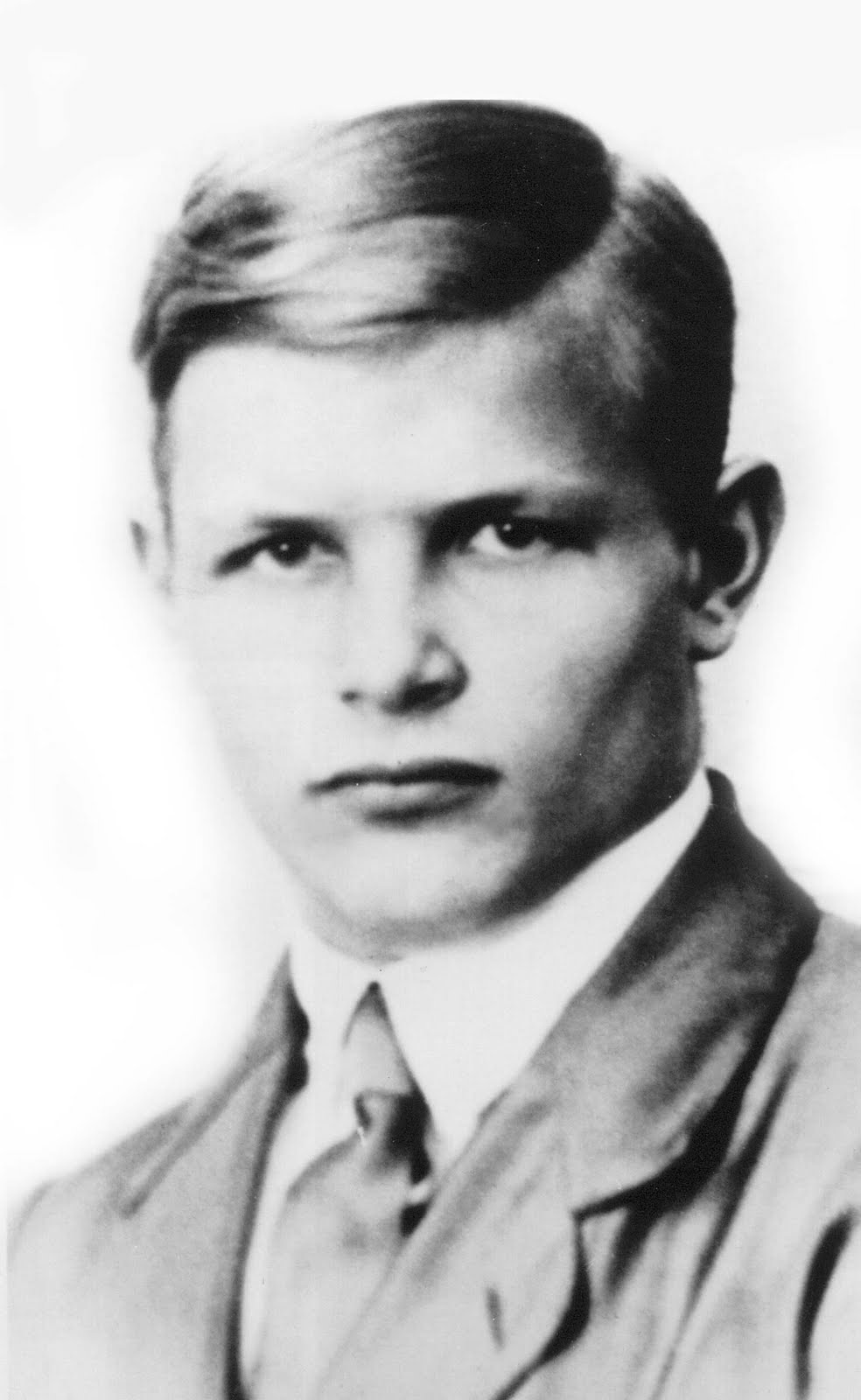
Dietrich Bonhoeffer - 1923

Dietrich Bonhoeffer – 1923

I am not a scholar of Dietrich Bonhoeffer. I have not read a book-length biography of the man. And my exposure to his writing is limited to Letters and Papers from Prison, the unabridged version (800 pages)!

With those prefatory remarks out of the way, let me say that I am intrigued by how two reviewers of a recent biography have responded to a claim about Bonhoeffer’s homosexual disposition. Charles Marsh, professor of Religious Studies at the University of Virginia, has authored, Strange Glory: A Life of Dietrich Bonhoeffer. My goal here is not to adjudicate the truth or falsehood of Mr. Marsh’s claim, but to ask why we are making much ado about Bonhoeffer’s alleged sexuality, which may be some-thing or no-thing at all.

Continue reading

Building Bridges at Pepperdine and Seattle Pacific

On April 13, Justin Lee and I did a joint presentation, Let’s Talk about [Homo]sexuality, at Seattle Pacific University. Like previous presentations at Pepperdine University and Gordon College, we shared a bit about our own stories, offered some practical tips for building bridges in the midst of disagreement. We also each presented a brief overview of our own beliefs about Christian sexual ethics, Justin arguing that Christians should bless same-sex marriage, and me arguing that they should not. Rachel Held Evans recently highlighted this as the “Best Dialogue” on sexual ethics.

Continue reading