Dietrich Bonhoeffer and the Romance of Friendship

Dietrich Bonhoeffer - 1923

Dietrich Bonhoeffer – 1923

I am not a scholar of Dietrich Bonhoeffer. I have not read a book-length biography of the man. And my exposure to his writing is limited to Letters and Papers from Prison, the unabridged version (800 pages)!

With those prefatory remarks out of the way, let me say that I am intrigued by how two reviewers of a recent biography have responded to a claim about Bonhoeffer’s homosexual disposition. Charles Marsh, professor of Religious Studies at the University of Virginia, has authored, Strange Glory: A Life of Dietrich Bonhoeffer. My goal here is not to adjudicate the truth or falsehood of Mr. Marsh’s claim, but to ask why we are making much ado about Bonhoeffer’s alleged sexuality, which may be some-thing or no-thing at all.

Continue reading

Faith and Seeking Understanding

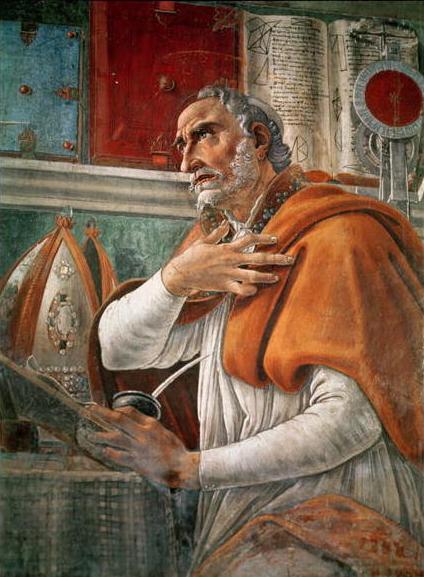
Saint_Augustine_Portrait

Botticelli: St. Augustine

Christian faith is not the conclusion of an argument: it begins in some sense or other in a personal encounter with God. Some people experience this encounter in a dramatic way, for others, it is much gentler and quieter. But we believe because we believe God, who, in some way, speaks to us. This belief is more a matter of personal trust in the God who loves us and has revealed himself to us than it is the conclusion of an intellectual investigation.

We are created in God’s image, and God is love. Our faith is thus best nurtured by experiencing God’s love through prayer, worship, and the sacraments, by acts of service or contemplation that we do out of love for God, and by Christian community, where we love others and experience and are nurtured in love.

God also knows and understands everything, and our desire to understand Him and the world He has created is part of His image in us. Although belief and trust are primarily personal responses to God’s love for us, we also want to understand what we believe and who we trust. There are, moreover, parts of Christian teaching—like the Trinity, the Incarnation, or the virgin birth—that are difficult to understand. And Christian faith also gives rise to difficult questions: for example, if God is all knowing and all powerful, and He desires what is good for everyone, why is there so much evil and suffering in the world?

Continue reading

Same-Sex Couples in the Church

Fr. James Martin – a Jesuit priest who has written quite eloquently on LGBT issues a number of times before – has a column in the latest edition of America magazine, “Simply Loving,” in which he asks why “so many gay people say they feel hatred from members of the church” despite the fact that most Catholics claim not to hate gay and lesbian people.

Fr. Martin suggests that one reason – aside from the obvious fact that a lot of LGBT people don’t agree with Catholic teaching about homosexual acts – is that it is very rare to hear many Catholics “say something positive about gays and lesbians without appending a warning against sin.”

The language surrounding gay and lesbian Catholics is framed primarily, sometimes exclusively, in terms of sin. For example, “We love our gay brothers and sisters—but they must not engage in sexual activity.” Is any other group of Catholics addressed in this fashion? Imagine someone beginning a parish talk on married life by saying, “We love married Catholics – but adultery is a mortal sin.” With no other group does the church so reflexively link the group’s identity to sin.

Continue reading

The Desirability of Truth

Sexual Authenticity - More ReflectionsMelinda Selmys has a new book out. Sexual Authenticity: More Reflections is a wonderful collection of reflections on sexuality, Christianity, mental disability, fiction writing, conversion, and much much more. It’s an incredibly rich work. Her love for her readers really shines through in this deeply personal and reflective book. You should order it here.

In a section on “12 Things Every Catholic Should Know About Homosexuality” she seeks to convey that “Truth told without affective love is not true love.” She writes, “Truth is not an abstraction. It’s a person.”

Continue reading

Noticing the Unnoticed: Some Things I’ve Learned from Being Loved

I’ve toyed with the idea of writing an intellectual autobiography. It would be an imprudently premature work, but, as I’ve turned the idea over in my mind, I’ve come to see the work as an immature inevitability, awaiting only time and much (though inescapably insufficient) work. When I first started to think about this, I considered titling it, “The Men Who Have Loved Me.” I’ve been remarkably lucky to be radically loved by various men in my life: my father, spiritual directors, priests, professors, mentors, roommates, and friends. I’ve been lovingly taught, mentored, cared for, listened to, corrected, and nurtured. I have fond memories of falling in and out of love with friends, with the tenderness of friendship lasting beyond the spark of romance.

But my loves have not only been other men. They’ve also been women, they’ve been other relationships, and they’ve been communities. More than anything, they’ve been the people who have noticed me.

Continue reading

Christianity and Same-Sex Eros

Nathan O’Halloran has an interesting article over at Vox Nova on the “richness of homosexual relationality.”

O’Halloran points out something I’ve highlighted before, which is that when the Church speaks negatively about “homosexuality,” it is not talking about the same thing we generally mean by “being gay.” When the Catechism speaks about “homosexuality,” it doesn’t even mean the same thing we mean by “homosexuality” in everyday speech (as opposed to its meaning within the technical discourse of Catholic moral theology). The teaching of the Church against homosexuality, as O’Halloran notes, “extends only to same-sex genital acts and does not refer to the sexuality as a whole.” The Bishops of England and Wales make this very clear in their pastoral letter Cherishing Life:

In so far as the homosexual orientation can lead to sexual activity which excludes openness to the generation of new human life … it is, in this particular and precise sense only, objectively disordered. However, it must be quite clear that a homosexual orientation must never be considered sinful or evil in itself.

Continue reading

Crucifixion and the Experience of Sexual Minorities

Catholic teaching often speaks of the experience of being gay as a “cross” or “trial”:

The number of men and women who have deep-seated homosexual tendencies is not negligible. This inclination … constitutes for most of them a trial … These persons are called to fulfill God’s will in their lives and, if they are Christians, to unite to the sacrifice of the Lord’s Cross the difficulties they may encounter from their condition (Catechism of the Catholic Church, 2358).

Or, again, in Cardinal Ratzinger’s letter On the Pastoral Care of Homosexual Persons:

What, then, are homosexual persons to do who seek to follow the Lord? Fundamentally, they are called to enact the will of God in their life by joining whatever sufferings and difficulties they experience in virtue of their condition to the sacrifice of the Lord’s Cross. That Cross, for the believer, is a fruitful sacrifice since from that death come life and redemption.

Continue reading

Escaping the Prison of the Self

During college, I was part of a young men’s prayer group, and our leader, an Anglican priest, once gave us a copy of a letter C. S. Lewis sent in 1956 to Keith Masson, an American reader of his. The topic of the letter was masturbation. Here is an excerpt:

For me the real evil of masturbation would be that it takes an appetite which, in lawful use, leads the individual out of himself to complete (and correct) his own personality in that of another (and finally in children and even grandchildren) and turns it back: sends the man back into the prison of himself, there to keep a harem of imaginary brides. And this harem, once admitted, works against his ever getting out and really uniting with a real woman. For the harem is always accessible, always subservient, calls for no sacrifices or adjustments, and can be endowed with erotic and psychological attractions which no real woman can rival. Among those shadowy brides he is always adored, always the perfect lover: no demand is made on his unselfishness, no mortification ever imposed on his vanity. In the end, they become merely the medium through which he increasingly adores himself…. And it is not only the faculty of love which is thus sterilized, forced back on itself, but also the faculty of imagination.

The true exercise of imagination, in my view, is (a) To help us to understand other people (b) To respond to, and, some of us, to produce, art. But it has also a bad use: to provide for us, in shadowy form, a substitute for virtues, successes, distinctions etc. which ought to be sought outside in the real world—e.g. picturing all I’d do if I were rich instead of earning and saving. Masturbation involves this abuse of imagination in erotic matters (which I think bad in itself) and thereby encourages a similar abuse of it in all spheres. After all, almost the main work of life is to come out of our selves, out of the little, dark prison we are all born in. Masturbation is to be avoided as all things are to be avoided which retard this process. The danger is that of coming to love the prison.

This is a wise and humane letter, and when my fellow students and I received it from our mentor many years ago, it generated several lines of fruitful conversation. But rereading it now, I’m struck afresh by its particular vantage point: It is written with the assumption, it seems, that its recipient will one day marry. The harem that the lustful young man keeps in his imagination “works against his ever getting out and really uniting with a real woman.” I’m sure Lewis was right to take that approach, but it makes me wonder what he would have said to many of us who are celibate and not planning to be married. If we are going to avoid masturbation, we need a different incentive than the one Lewis offers, since few of us expect to “unite with a real woman” someday.

Continue reading

A First Response to Austin Ruse

Pope Francis

Last week, Crisis Magazine published a critical profile of my writings by Austin Ruse.

Over the last few days, I’ve spent some time thinking about Ruse’s article and following the comments on his Crisis articles. I’ve also been reading some of his other writings about homosexuality and the reactions he’s triggered in the gay press. (I would not recommend this as a way of spending your Christmas holidays.)

In the midst of all of this, I’ve tried to figure out what to say in response that is charitable and likely to move the conversation forward.

Ruse presents himself as deeply committed to Church teaching on this question. And if we limit the message of the Church to “gay sex is an abomination,” there is no question that Ruse communicates this teaching clearly, with emphasis, and with a certain joie de combat.

However, in an interview published in America Magazine last summer, Pope Francis said:

A person once asked me, in a provocative manner, if I approved of homosexuality. I replied with another question: ‘Tell me: when God looks at a gay person, does he endorse the existence of this person with love, or reject and condemn this person?’ We must always consider the person. Here we enter into the mystery of the human being. In life, God accompanies persons, and we must accompany them, starting from their situation. It is necessary to accompany them with mercy. When that happens, the Holy Spirit inspires the priest to say the right thing.

Continue reading

The Line Dividing Good and Evil

In the midst of all the last minute shopping, holiday parties, Christmas music, Santa Clause, and so forth, it’s easy to forget why Jesus came in the first place: to save us from our sin.

In the Gulag Archipelago, Aleksandr Solzhenitsyn wrote:

“If only it were all so simple! If only there were evil people somewhere insidiously committing evil deeds, and it were necessary only to separate them from the rest of us and destroy them. But the line dividing good and evil cuts through the heart of every human being. And who is willing to destroy a piece of his own heart?”

If evil were something done by evil people to good people, then God would only need to destroy the evil people. But since “the line dividing good and evil cuts through the heart of every human being,” God had to use a different plan to save us.

I worry that few far too many American Christians have forgotten that this Christmas. Over at Part of a Plan, Zachary Perkins writes:

About a week ago, Phil Robertson was suspended from his family’s show Duck Dynasty for comments he made regarding homosexuality. The fury poured forth from social media like none other. Many Christian are even now organizing boycotts against A&E.

About two to three days later, Uganda passes a bill through it’s legislative body that is now waiting a signature from the President which would imprison homosexuals for life, give 14 years imprisonment to Ugandan citizens that help gays and potentially put some gays to death. Update: The death penalty provision has been shelved, but the long prison terms remain.

It’s been three days since the news from Uganda broke out. I’ve searched through ChristianityToday.com, ChristianPost.com, and CBN.com, but there is still not one mention of the story that Uganda has passed a bill which could put to death gays and lesbians. I even searched ReligionToday.com and instead of finding stories about Uganda’s growing violence towards gays and lesbian people in their community, I saw one story titled “Ugandan Church’s Remarkable Growth”.  Phil Robertson’s story is still plastered all over the front pages of these outlets.

“For God sent the Son into the world, not to condemn the world, but that the world might be saved through him.” In either our loud crusades or in our silent complicity, is that the message the world is hearing from Christians this Christmas?