Sin and Sexual Minorities Part 1: Introduction

In Christian discussions about sexual identity issues, the notions of “sin” and “morality” often come up. Typically, gay sex is in focus. There are often complaints about how the gay community is promoting particular sins or forms of sexual immorality. As someone who holds to a traditional understanding of sexual ethics, I agree with some of these concerns.

However, I think this is a far too limited way to view sin and morality. Christian morality cannot be reduced to sexual ethics; other issues are critically important as well. Furthermore, many complaints by Christians demonstrate much greater concern about certain sins committed by sexual minorities than about sins committed against sexual minorities, if sins against sexual minorities are acknowledged at all. Sins against sexual minority people are in fact serious and common, and as Matt Jones discusses in “What Is Love?,” true concern for sexual minorities requires us to acknowledge and fight these sins.
Continue reading

Reflections on Russia

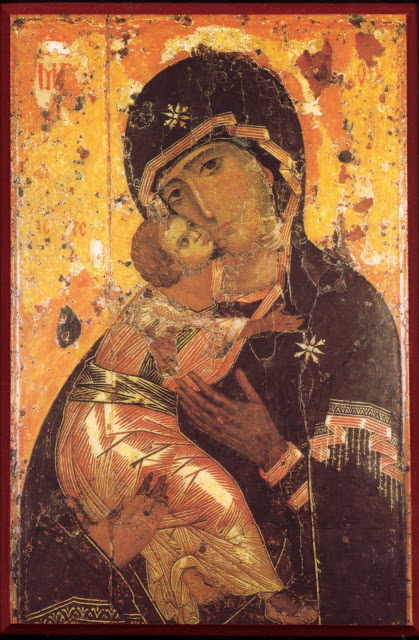
Vladimir Mother of God IconI grew up in the Eastern Orthodox Church and continue to call her home so whenever I see her handling the topic of homosexuality poorly it grieves me. This has never been so true as with the continued debate in Russia over the rights of its LGBT citizens. I feel very strongly that there must be a better way to discuss family values and uphold the basic rights and safety of a country’s citizens than Russia has been demonstrating. The Russian Orthodox Church’s involvement in the current debate only adds additional hurt and only legitimizes the Russian government’s persecution of LGBT people.

Continue reading

The Problem with the “Gag Reflex”

A couple of days ago, Thabiti Anyabwile put up a post on his Gospel Coalition blog entitled The Importance of Your Gag Reflex When Discussing Homosexuality and “Gay Marriage” (warning: post contains graphic language).

There are a number of problems with this post. Before criticizing, however, I want to make a couple of points.

First, prior to reading this blog post, I knew relatively little about Anyabwile; however, the only contexts in which I had heard of him had been overwhelmingly positive. So I want to be clear that the negative things I say about this particular post are not intended to be an overall judgment of Anyabwile. I know too little to make such a judgment, and, aside from the problems with this particular post, everything else I have heard about him has been positive.

Second,  many of those who have criticized this post have done so because they disagree with Anyabwile about the morality of gay sex. However, I agree with him that gay sex is contrary to God’s plan in creation, and have written extensively on the subject (see, for example, The Great Debate, this speech at Georgetown University, or, for a briefer statement, this speech at the University of Louisiana at Lafayette). I share his concern about the way American culture has ceased to respect the sanctity of marriage, and have been defending the traditional Christian understanding of marriage for many years now.

(I will add that as a Lord of the Rings fan who loves to fly, the photo of the Air New Zealand 777 in painted in the Lord of the Rings livery was a pleasant distraction in an otherwise disappointing post.)

Having said all that, however, this post is one of the more problematic discussions of homosexuality I have seen in a serious Christian publication in recent years.

Continue reading

A Quiet, Gay-Rights Revolution Among Evangelicals? Well, Maybe…

A few days ago, The Atlantic ran a piece about the growing support for gay rights among Christians. But the article left me wanting more precision. Consider this claim:

In 2004, just 36 percent of Catholics, the Christian sect most supportive of gay marriage, favored it, along with 34 percent of mainline Protestants; today, it’s 57 percent of Catholics and 55 percent of mainline Protestants. Even among white evangelical Protestants, the most hostile group to gay marriage, support has more than doubled, from 11 percent in 2004 to 24 percent in 2013.

I can’t shed much light on the Catholic and mainline Protestant percentages there, but I can highlight how that figure for evangelical Protestants may be misleading.

Continue reading

How is Gay Celibacy Different from Straight Celibacy?

[This is the third in a series of three posts on celibacy. The first was What Does Genesis 2:18 Really Teach? and the second was The Gift of Celibacy.]

While on the topic of singleness and celibacy, I think it would be helpful to talk about some of the practical ways that things are different for a lot of people who are celibate because they’re exclusively gay.  I’ll start with my standard disclaimer that as someone who is attracted to both sexes, I am not entirely speaking out of experience.  However, this is something I’ve discussed quite a bit with others, and I think my experience brings something to bear as well.  I’m not trying to say that the situation of exclusively gay people is entirely unique, but there are some practical differences people don’t always think about.

Many straight Christians are celibate by choice.  They may discern a specific call to celibacy as a form of dedication to God.  Those who find celibacy forced upon them by circumstances, regardless of sexual orientation, will have unique difficulties.  Ron Belgau offered some initial reflections on these issues in Seeds of Celibacy, and I offered some related thoughts in The Gift of Celibacy.  Even in these cases, however, there are some important differences between involuntary celibacy for straight people and involuntary celibacy for gay and lesbian people.

Continue reading

How Do Bodies Matter?

In the most recent issue of Christianity Today, Andy Crouch has an excellent editorial on the church’s future and matters LGBTQIA. Please do read the whole thing. He writes,

There is really only one conviction that can hold this coalition of disparate human experiences [i.e., the experiences captured under the label LGBTQIA] together. And it is the irrelevance of bodies—specifically, the irrelevance of biological sexual differentiation in how we use our bodies.

What unites the LGBTQIA coalition is a conviction that human beings are not created male and female in any essential or important way. What matters is not one’s body but one’s heart—the seat of human will and desire, which only its owner can know.

Continue reading

Rachel Held Evans on friendship and the culture wars

Rachel Held Evans recently put up a blog post expressing frustration with the overly politicized approach to homosexuality taken by many conservative Christians.

When I speak at Christian colleges, I often take time to chat with students in the cafeteria.  When I ask them what issues are most important to them, they consistently report that they are frustrated by how the Church has treated their gay and lesbian friends Some of these students would say they most identify with what groups like the Gay Christian Network term “Side A” (they believe homosexual relationships have the same value as heterosexual relations in the sight of God). Others better identify with “Side B” (they believe only male/female relationship in marriage is God’s intent for sexuality).  But every single student I have spoken with believes that the Church has mishandled its response to homosexuality.

Most have close gay and lesbian friends.

Continue reading