Sin and Sexual Minorities Part 7: Of Logs and Specks

In this final post of my series on sin and sexual minorities, I will examine an additional major principle that is useful in determining what sins we should prioritize addressing, and I will conclude with a few related thoughts. This principle comes from Matthew 7:3-5 (ESV):

Why do you see the speck that is in your brother’s eye, but do not notice the log that is in your own eye? Or how can you say to your brother, ‘Let me take the speck out of your eye,’ when there is the log in your own eye? You hypocrite, first take the log out of your own eye, and then you will see clearly to take the speck out of your brother’s eye.
Continue reading

Sin and Sexual Minorities Part 5: Sins of the Heart

Scripture clearly teaches that sin comes from the heart. For example, in Matthew 15:18-20, Jesus teaches that the sins that defile a person come from inside a person’s heart, rather than from outside. In order to truly address our own sins, including the sins described in the previous two posts, we must address the condition of our hearts. The gospel is not really about behavior modification, but about inner transformation. Therefore, in this post, I will discuss some of the attitudes of the heart that contribute to sins against sexual minority people. Despite the fact that I’m not straight, these sins in particular are ones that I have often had to address in my own life, and that I have not completely overcome. However, I believe it will be edifying to bring them to light.

A very common sin, and one that Jesus addressed repeatedly during his earthly ministry, is that of self-righteousness. I think that a lot of straight Christians see themselves as fundamentally better people than most sexual minority people. This is not a truly Christian attitude, because we are all sinners who rely on God for salvation and sanctification. We have done nothing to earn a better place in God’s eyes through our own actions.

Continue reading

Sin and Sexual Minorities Part 3: Sins of Word and Deed

Sexual minority people are often the victims of several forms of overt sins of word and deed. Many of these are actions that we can all acknowledge are absolutely sinful. However, I find that many Christians are reluctant to admit the frequency with which sexual minorities in particular are victimized. From what I’ve found, this often results simply from lack of awareness, so I would like to use this post to provide some basic background about issues we should be addressing. Unfortunately, the issues are too numerous to do justice to in a single blog post, so I cannot be comprehensive.

In “Day of Silence 2013,” I discussed the grave moral issue of anti-gay bullying and argued that we need to consider more than just sexual ethics when discussing the topic. Similar issues arise with the issue of hate crimes. In some parts of the world, it is tragically common for sexual minority people to be murdered or brutally beaten if their sexuality becomes known. Milder forms of harassment are also common, and are almost ubiquitous in significant segments of society. For example, “faggot” is a common insult, even though it is deeply offensive. Many people will call something they don’t like “gay.” I can tell you that as someone realizing my own attraction to other guys, hearing that has often been hurtful. Sexual minority people may be rejected socially if their sexuality is known, regardless of their beliefs or subsequent decisions about how to live. Although I have fortunately not experienced this personally to any significant degree, it has happened to others. This sort of behavior should never be considered acceptable.

Continue reading

Prejudice? Or Defending Marriage?

I think I was in middle school when the pastor of the little Southern Baptist Church I grew up in preached about Jesus’ words on the subject of divorce for the last time. Afterward, he received a great deal of criticism from many in the congregation—including a number of Sunday School teachers and other influential members—who were divorced and remarried.

After that, he did not preach any more sermons condemning divorce.

On the other hand, when there were sermons that denounced the homosexual agenda, or called for reinstating the biblical death penalty for homosexuals, the pastor’s call was met with a resounding “amen,” and there were no protests from the congregation. So those sermons continued throughout my youth, and were still occurring from time to time when I left for college.

Continue reading

Sin and Sexual Minorities Part 2: Why I Criticize Christians

Many, though not all, of the sins I will mention in this series are not infrequently committed by Christians. In the past, when I’ve brought up these kinds of sins, I’ve sometimes been accused of harboring a deep-seated hatred of Christians. As is probably obvious to everyone who actually knows me, nothing could be further from the truth. I think these accusations might come from people whose thinking has been deeply affected by a mentality of culture war, and who see my concerns as a form of friendly fire that inhibits an effective attack on the enemy. I don’t think much of such a paradigm, especially given that our true enemy is not of this world and that we should be at war with all forms of sin, especially our own sin.

So why do I actually choose to spend so much time focusing on the sins of Christians? It can basically be summed up the same way Matt Jones discusses his reasons for coming out in Going Public, Part 2—“I love the Church too much to let it love LGBTQ people so poorly.” I think that some of the ways many Christians have approached sexual identity issues have been incredibly detrimental to the witness of the Church, both to sexual minorities and to the culture at large.

Continue reading

Sin and Sexual Minorities Part 1: Introduction

In Christian discussions about sexual identity issues, the notions of “sin” and “morality” often come up. Typically, gay sex is in focus. There are often complaints about how the gay community is promoting particular sins or forms of sexual immorality. As someone who holds to a traditional understanding of sexual ethics, I agree with some of these concerns.

However, I think this is a far too limited way to view sin and morality. Christian morality cannot be reduced to sexual ethics; other issues are critically important as well. Furthermore, many complaints by Christians demonstrate much greater concern about certain sins committed by sexual minorities than about sins committed against sexual minorities, if sins against sexual minorities are acknowledged at all. Sins against sexual minority people are in fact serious and common, and as Matt Jones discusses in “What Is Love?,” true concern for sexual minorities requires us to acknowledge and fight these sins.

Continue reading

Reflections on Russia

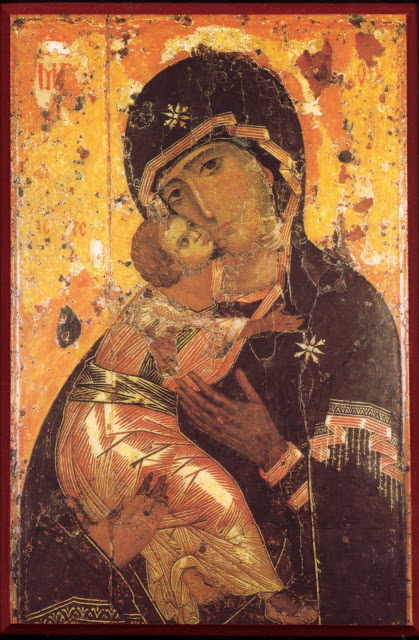
Vladimir Mother of God IconI grew up in the Eastern Orthodox Church and continue to call her home so whenever I see her handling the topic of homosexuality poorly it grieves me. This has never been so true as with the continued debate in Russia over the rights of its LGBT citizens. I feel very strongly that there must be a better way to discuss family values and uphold the basic rights and safety of a country’s citizens than Russia has been demonstrating. The Russian Orthodox Church’s involvement in the current debate only adds additional hurt and only legitimizes the Russian government’s persecution of LGBT people.

Continue reading

Instincts, Ethics, and the “Yuck Factor”: A Tentative Consideration

In light of earlier comments concerning Thabiti Anyabwile’s article, I thought it might be productive to say a few things about the role of instinctual judgments in the moral life, particularly in issues of sexual sin. There has been a lot said on the matter of his role as a pastor, etc., and I think there is nothing I need add on the matter. There are, however, a few provisos which can clarify the role of instinct in the general discussion.

When we confront a sin, we are morally bound to be disgusted by it rationally speaking, that is, according to what we know discursively. If I am put into a situation where it seems as though murder will be a nice way out for all concerned (except, perhaps, for the victim), I ought to know, by my rationality, that murdering someone is an offense against the God who became man that we might have life, and have it more abundantly. And we are morally bound to seek this disgust of the reason; this is called the duty of forming our conscience.

Continue reading

C. S. Lewis on Homosexuality & Disgust

In the last few days, there has been an extensive debate over a post by Thabiti Anyabwile arguing that Christians should have done more to invoke people’s “gag reflex” about gay sex in order to oppose same-sex marriage. I responded directly to this yesterday, and also published a response by Kyle Keating.

Today, I want to highlight C. S. Lewis’s most extensive comment on the subject of homosexuality.

Lewis is probably the most effective, clear-headed communicator of Christian belief to unbelievers the Church has produced in a century. He understood how to appeal persuasively to his readers’ heads, hearts, and imaginations. His perspective is worth listening to when it comes to one of the most difficult communication challenges the Church faces in America today.

Continue reading

How is Gay Celibacy Different from Straight Celibacy?

[This is the third in a series of three posts on celibacy. The first was What Does Genesis 2:18 Really Teach? and the second was The Gift of Celibacy.]

While on the topic of singleness and celibacy, I think it would be helpful to talk about some of the practical ways that things are different for a lot of people who are celibate because they’re exclusively gay.  I’ll start with my standard disclaimer that as someone who is attracted to both sexes, I am not entirely speaking out of experience.  However, this is something I’ve discussed quite a bit with others, and I think my experience brings something to bear as well.  I’m not trying to say that the situation of exclusively gay people is entirely unique, but there are some practical differences people don’t always think about.

Many straight Christians are celibate by choice.  They may discern a specific call to celibacy as a form of dedication to God.  Those who find celibacy forced upon them by circumstances, regardless of sexual orientation, will have unique difficulties.  Ron Belgau offered some initial reflections on these issues in Seeds of Celibacy, and I offered some related thoughts in The Gift of Celibacy.  Even in these cases, however, there are some important differences between involuntary celibacy for straight people and involuntary celibacy for gay and lesbian people.

Continue reading