
From time to time, I see conservative Christians argue that homosexual acts are significantly worse than other forms of sexual sin—like fornication or adultery—because at least those other sins are “natural.” Often the same argument is applied even at the level of temptation: temptation toward homosexual sin is worse than temptation toward heterosexual sin. (For example, Matt Moore recently made such an argument, despite arguing that it not sinful simply to experience temptation.) This argument seems to be based on an exaggerated conclusion from Paul’s use of the phrase “contrary to nature” in Romans 1:26-27.

William Dyce, “Francesca da Rimini.” Based on the story of Paulo and Francesca in Canto V of Dante’s Inferno.
In order to evaluate this argument, it’s important to understand what makes something “natural” and what makes it “contrary to nature.” From a Christian perspective, this must come down to God’s intent when He created the world. Something is “natural” if it is in line with God’s created order, and “contrary to nature” if it rejects some part of that order.
Some people’s contention seems to be that the description of homosexual practice as “contrary to nature” is intended to set homosexual practice apart from other sins. However, I don’t think that Paul would describe as “natural” the more general “lust” and “impurity” in Romans 1:24, the idolatry in Romans 1:25, the various vices in Romans 1:29-30, or the judgment discussed at the start of Romans 2. And in the other passages where Paul addresses homosexuality, 1 Corinthians 6:9-11 and 1 Timothy 1:8-11, he includes it on a list with several other sins, including generic “sexual immorality.” Romans 1 is the only case where Paul singles out homosexuality as “contrary to nature,” but he does not say that it is unique in that category even there.


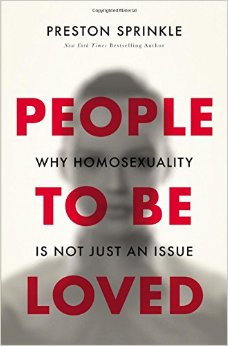 This is why I rarely respond to critical reviews of my books. It could look rather defensive if you do. Plus, who has the time? It’s tough enough to write a book; to respond to its critics would require that I quit my day-job. But it’s difficult not to respond to Paulk’s review. Again, I’m totally fine if someone represents what I say accurately and then disagrees with what I say—preferably by providing evidence. But misrepresenting someone’s work is never helpful especially when people are reading reviews to get an honest idea about the book’s content.
 Spiritual Friendship
You must be logged in to post a comment.