Same-Sex Couples in the Church

Fr. James Martin – a Jesuit priest who has written quite eloquently on LGBT issues a number of times before – has a column in the latest edition of America magazine, “Simply Loving,” in which he asks why “so many gay people say they feel hatred from members of the church” despite the fact that most Catholics claim not to hate gay and lesbian people.

Fr. Martin suggests that one reason – aside from the obvious fact that a lot of LGBT people don’t agree with Catholic teaching about homosexual acts – is that it is very rare to hear many Catholics “say something positive about gays and lesbians without appending a warning against sin.”

The language surrounding gay and lesbian Catholics is framed primarily, sometimes exclusively, in terms of sin. For example, “We love our gay brothers and sisters—but they must not engage in sexual activity.” Is any other group of Catholics addressed in this fashion? Imagine someone beginning a parish talk on married life by saying, “We love married Catholics – but adultery is a mortal sin.” With no other group does the church so reflexively link the group’s identity to sin.
Continue reading

Building Bridges at Pepperdine and Seattle Pacific

On April 13, Justin Lee and I did a joint presentation, Let’s Talk about [Homo]sexuality, at Seattle Pacific University. Like previous presentations at Pepperdine University and Gordon College, we shared a bit about our own stories, offered some practical tips for building bridges in the midst of disagreement. We also each presented a brief overview of our own beliefs about Christian sexual ethics, Justin arguing that Christians should bless same-sex marriage, and me arguing that they should not. Rachel Held Evans recently highlighted this as the “Best Dialogue” on sexual ethics.

Continue reading

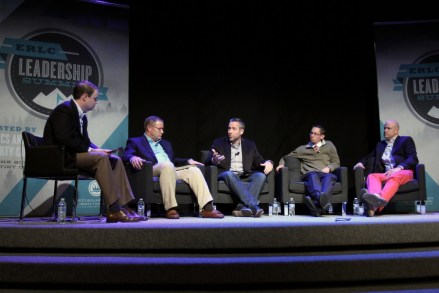
Caught in the In-Between: A Reflection on the ERLC’s Panel on Homosexuality

As I was sitting at home on Monday night, I had every intention of watching some playoff hockey and then heading to bed. But a quick glance at my Twitter feed during a commercial break reminded me the ERLC Leadership Summit was happening, and that the panel on homosexuality was about to start. Intrigued, I decided to tune in. I kept my Twitter feed up to see what type of response this panel might receive from the broader internet community.

ERLC Homosexuality Panel

How can I describe what it was like to listen to the panel? As someone who comes from a conservative church background and counts many Southern Baptists as friends, I was both sympathetic and hopeful for the ERLC’s panel discussion. As someone who is deeply invested in LGBT issues and has seen the church fail routinely in this area, I was also nervous. They were, after all, in a sense talking about me.  Continue reading

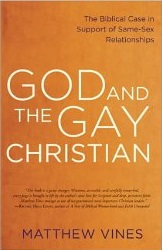
A Review of God and the Gay Christian

God and the Gay Christian - Matthew VinesI got the chance to spend some quality time with Matthew Vines earlier this year at a conference, and it was clear through both our interactions and his writing that Matthew is a sincere man who engages this conversation with grace. Matthew takes Scripture seriously, and he argues for affirmation of same-sex marriage because he truly believes that is the redemptive vision of Scripture and the most loving posture the church can have toward gay people. I want to say from the outset of my review of his book, God and the Gay Christian, that it’s obvious Matthew has been deeply troubled by the way the church has mistreated the gay community, and he feels it can’t reflect God’s heart toward men and women made in His image. I believe he’s correct in that analysis, and while I disagree with his answers to the problem, I believe the church would do well to listen to the concerns he raises because they’re concerns that need to be taken seriously if we’re going to demonstrate love and compassion toward this group of men and women loved by God.

Continue reading

Chastity and Privilege

Single, lonely heterosexual Christians who want to marry are in a different situation to faithful same-sex attracted Christians who cannot even entertain the idea of marriage. The cross of homosexuality is heavier than many others. Same-sex attracted Christians who, amidst all the temptations of our culture, eschew the flesh and bear that cross faithfully, are among the true heroes in the Church today.

If you are a gay or lesbian Christian trying to live out a traditional sexual ethic, how often have you heard this, or something like it? It’s something—in various guises—that I’ve heard fairly often, even if not directed at me personally.

A spirituality of redemptive suffering is something that is close to my own heart, and I wouldn’t want to take it away from anyone (though I would point out that everyone suffers somehow, and intimacy with God through cross-bearing is not limited to one “special” group or their experiences). But statements like this also represent a subtle danger.

Continue reading

The Freedom to Love

When many of my friends moved toward a theology that affirms gay sexual relationships, they did so because they grew weary of saying “no” to love. Several of them described an experience where they were fully committed to the church’s traditional teaching on sexual ethics when they grew to deeply love someone of the same sex. They remained chaste for a season and prayed for direction, then eventually sensed the Lord saying: You’re free to love.

While many Christians considered their shift an act of rebellion—a plunge into sin—they saw it as the only path to love and intimacy. They recognized that “It’s not good for man to be alone,” and they longed to serve the one they love, share their lives with the one they love, and mutually draw energy from that love to better serve those around them. Many felt like the traditional ethic required them to cut off fundamental aspects of being human in order to be chaste: they felt saying “no” to sexual relationships meant saying “no” to love, and that saying “no” to love meant saying “no” to any intimacy, and that saying “no” to intimacy meant saying “no” to feelings altogether, which eventually led to detachment and isolation. The burden felt unbearable.

Continue reading

Crucifixion and the Experience of Sexual Minorities

Catholic teaching often speaks of the experience of being gay as a “cross” or “trial”:

The number of men and women who have deep-seated homosexual tendencies is not negligible. This inclination … constitutes for most of them a trial … These persons are called to fulfill God’s will in their lives and, if they are Christians, to unite to the sacrifice of the Lord’s Cross the difficulties they may encounter from their condition (Catechism of the Catholic Church, 2358).

Or, again, in Cardinal Ratzinger’s letter On the Pastoral Care of Homosexual Persons:

What, then, are homosexual persons to do who seek to follow the Lord? Fundamentally, they are called to enact the will of God in their life by joining whatever sufferings and difficulties they experience in virtue of their condition to the sacrifice of the Lord’s Cross. That Cross, for the believer, is a fruitful sacrifice since from that death come life and redemption.

Continue reading

On Pressure

A common refrain I see from certain conservative Christian commentators is that homosexuality is “celebrated” in Western culture and that people are “pressured” into accepting “the homosexual lifestyle.” In some sense, I can see where this perception is coming from. I’m currently studying at a large public university, and I have previously done internships in very gay-friendly corporate settings. In these contexts, I do feel quite a bit of pressure to change my beliefs and to affirm all loving, monogamous relationships, including gay relationships with a sexual component.

There are many ways that this perception is problematic, however. The biggest problem I see is that the pressure is far from being one-sided. Ironically, the same people complaining about pressure to affirm gay relationships are themselves often creating immense pressure in a different direction. This pressure is often encouraging me to go beyond holding to traditional sexual ethics, but also to change the labels I use, to try to change my sexual orientation, or to focus my efforts and attention on opposing the gay-affirming segments of society. In some ways, I feel this sort of pressure more acutely than I do the pressure to affirm sexual gay relationships. Rachel Held Evans recently expressed this point well while discussing some related issues: “We aren’t ‘giving in’ to the culture; our culture is evangelical Christianity. We’re struggling with that culture, and doing so comes with a cost.” The fact of the matter is that the social connections that matter the most to me are those of my brothers and sisters in Christ.

Continue reading

“S1NGLE – God’s Gifts : Our Plan”

Here’s something that may interest some of you.

On Saturday I spoke at a conference on singleness at Redeemer Presbyterian Church in New York, and the videos are all online if you want to watch them. My session starts (I’ve been told, I think!) around the 40-minute mark in the video labeled “Morning Sessions,” and I was also on a panel with the other speakers in the afternoon.

It was a real joy to finally have the chance to visit Redeemer. I’ve been listening to Tim Keller’s preaching since I was in high school, so it was a huge honor to meet him and Kathy and Brent Bounds the other amazing conference organizers. If any of you are reading this, thank you again for the warm hospitality and the stimulating conversation!