Feeds:
Posts
Comments

On Thursday, the Boy Scouts of America will vote on a revision of their membership standards. Under the proposed standards, the Scouts will not deny membership to any boy on the basis of sexual orientation or preference alone. The standards also affirm that “any sexual conduct, whether homosexual or heterosexual, by youth of Scouting age is contrary to the virtues of Scouting.”

As both a proud Eagle Scout and a celibate gay Christian, the vote, and the debate that has proceeded it, is personal.

Continue Reading »

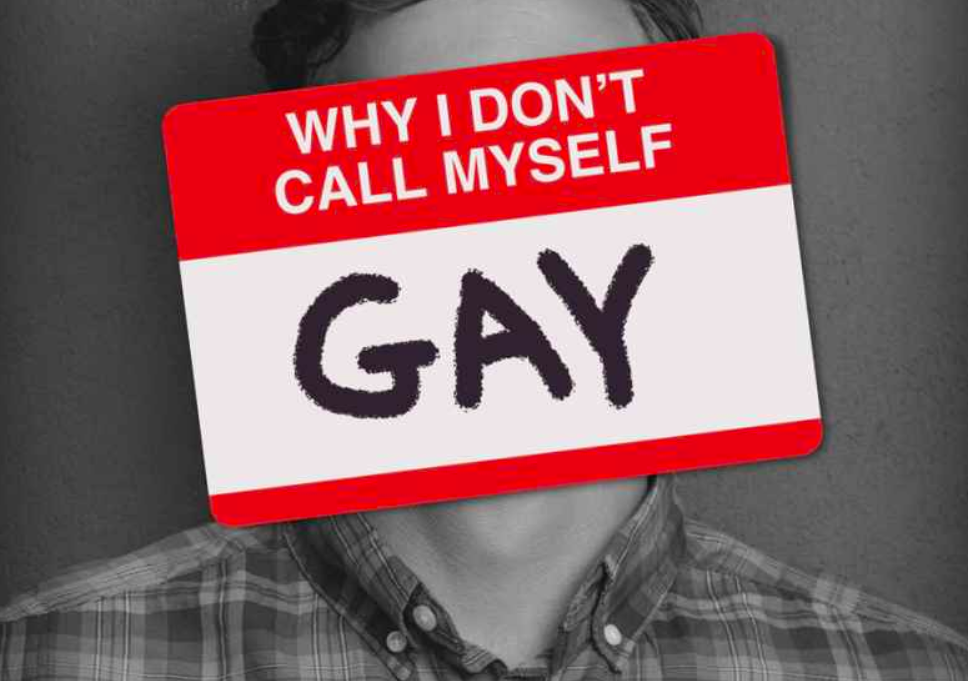
Jonathan Rauch’s brief memoir, Denial: My Twenty-Five Years Without a Soul, published recently as a Kindle Single, describes how powerful it can be to find that your previous unnamable self has a place. For much of the story’s first half, Rauch tells about trying to interpret his same-sex attraction as “envy.” He would admire the muscles of his friends and tell himself that that admiration was his longing, as a bookish, skinny kid, to have the same kind of body. But as the story finishes, he realizes that was dissembling: “I had resisted imagining myself as a homosexual or even imagining that it might be possible for me to be a homosexual, because I had supposed that to be a homosexual is to lose any possibility of a normal life.”

Near the end of his narrative, Rauch says this:

And as I write these words, I have been married for going on three years. Married. The very word is a miracle to me. The young boy sitting on the piano bench structured his life, shaped his personality, twisted and then untwisted himself, around the certain knowledge that he could not love in a way which could lead to marriage; and so he grimly determined that he could not love at all. But he was wrong. He underestimated himself and he underestimated his countrymen even more. They and he have found a destination for his love. They and he have found, at last, a name for his soul. It is not monster or eunuch. Nor indeed homosexual. It is: husband.

Continue Reading »

In his treatise On Spiritual FriendshipAelred of Rievaulx, a 12th-century Cistercian abbot, insists that we need to test our beliefs about friendship with Scripture. The treatise is a series of dialogues in which three monks join Aelred to examine their ideas about friendship in light of their Christian faith.

One of the most important passages in the treatise is the discussion of the three kinds of friendship—carnal, worldly, and spiritual—found in Book I, paragraphs 33-49. (This division of different kinds of friendship is not original to Aelred: Aristotle drew similar distinctions in the Nicomachean Ethics, Book 8, chapters 2-6.)

We might think that Aelred is talking about kinds of friendship in the same way that we think of planes, trains, and automobiles as three different kinds of transport vehicles. Although a car is very different from a plane, and both are very different from a train, each is a legitimate kind of vehicle.

This is not Aelred’s idea, however. He thinks that only spiritual friendship represents a true form of friendship. Carnal and worldly friendship are not real friendship, although many think they are. In speaking of different kinds of friendship, then, Aelred means to distinguish between true friendship and two different kinds of false friendship.

Continue Reading »

In his warmly pastoral Friends in Christ: Paths to a New Understanding of Church, Brother John of Taizé discusses the rise of monasticism as a response to Scriptural injunctions to brotherly love. Monasticism, in this account, was the place where a uniquely Christian theology of friendship came into its own. But monastic orders were also the places where the unique dangers of friendship became apparent: “Within a community, human friendships, notably among brothers or sisters with little experience of the spiritual life, could easily have a divisive effect on the whole body, leading to the formation of cliques or factions, even if of only two members.” Anyone who has spent time in Christian communities of whatever variety knows what he means.

Continue Reading »

Church Before Sex

When I was in seminary, one of the hot topics we students debated was where each of us stood on the matter of women’s ordination. In our evangelical world, this issue was talked about in terms of “egalitarianism” (i.e., women are equally gifted alongside men and are called to serve at every level of Christian ministry) versus “complementarianism” (i.e., women are equal in dignity and worth but are called to different forms of ministry in the church than men are, and women are not permitted to be “elders” [presbyteroi]).

It was only later, after seminary, that it occurred to me that our debate was, among other things, odd. We students interrogated each other, and each of us felt a (mostly self-imposed) obligation to settle “our position” on the matter. But in retrospect, I view that as strange—because whether women can be ordained to diaconal or priestly/pastoral ministry is not a question that can be “settled” by an individual Christian, even one who’s been to seminary and been ordained. Rather, that’s a matter for churches to decide. Even in the Baptist church to which I belonged at that time, it made no real difference what I as a seminarian thought on the matter; nor would it have made much difference if I’d been a pastor or elder there. What mattered is what my denomination had decided and whether I wanted to remain a part of it, working within its confines or else kicking against the goads.

Continue Reading »

Scout’s honor

A while back, a student in my philosophy of religion class turned in a paper which stated that, in The Moral Landscape: How Science Can Determine Human Values, Sam Harris argued that morality was based on scientific discoveries about the order God had put into the world at the Creation. I was, I confess, a bit at a loss about what sort of helpful comments I could make on the paper. There’s only so much I could do to soften the blow of, “Actually, Sam Harris is one of the leading advocates of atheism, and his book argued that we can base morality on science, not God.”

I was reminded of that student’s paper the other day, when a friend pointed me to an article by Ken Klukowski, the Director of the Center for Religious Liberty at the Family Research Council, titled “Boy Scout Leaders Propose Incoherent Policy on Gay Scouts.”

Continue Reading »

In his memoir Hidden: Reflections on Gay Life, AIDS, and Spiritual Desire, Richard Giannone, emeritus professor at Fordham, writes about his mother’s slow decline and his care for her in her final days. Central to the story is Giannone’s long-time partner Frank. After Giannone’s mother’s death, as Giannone begins immediately to care for his aging sister, he becomes more keenly aware of all the way his life is intertwined with his partner’s. For instance:

When Frank and I returned early evening that Saturday to our apartment in the Village, I was still shaken. By 2003 Frank had been with me for twenty-two years. Our partnership was repeatedly tested in the fire of social defiance and in the emergency room with family members and each other. Characteristically, Frank spoke not a word. He put down the bags with clean laundry, pulled me against him, and held me tight. Frank’s grip was so firm that his Parkinson’s got his arms wedged hugging me. We were caught, locked, immovable. We laughed. The sinews of our attached muscles held the love that bound us through the tight spot with Marie [Giannone’s sister].

I was home. I was in my faithful friend and partner’s shelter.

I chose this except almost at random. Virtually every chapter is filled with similarly tender moments of quiet intimacy.

Continue Reading »

Follow

Get every new post delivered to your Inbox.

Join 96 other followers